
La vita è bella: The Optimism of the Oxymoron from Coyoacán
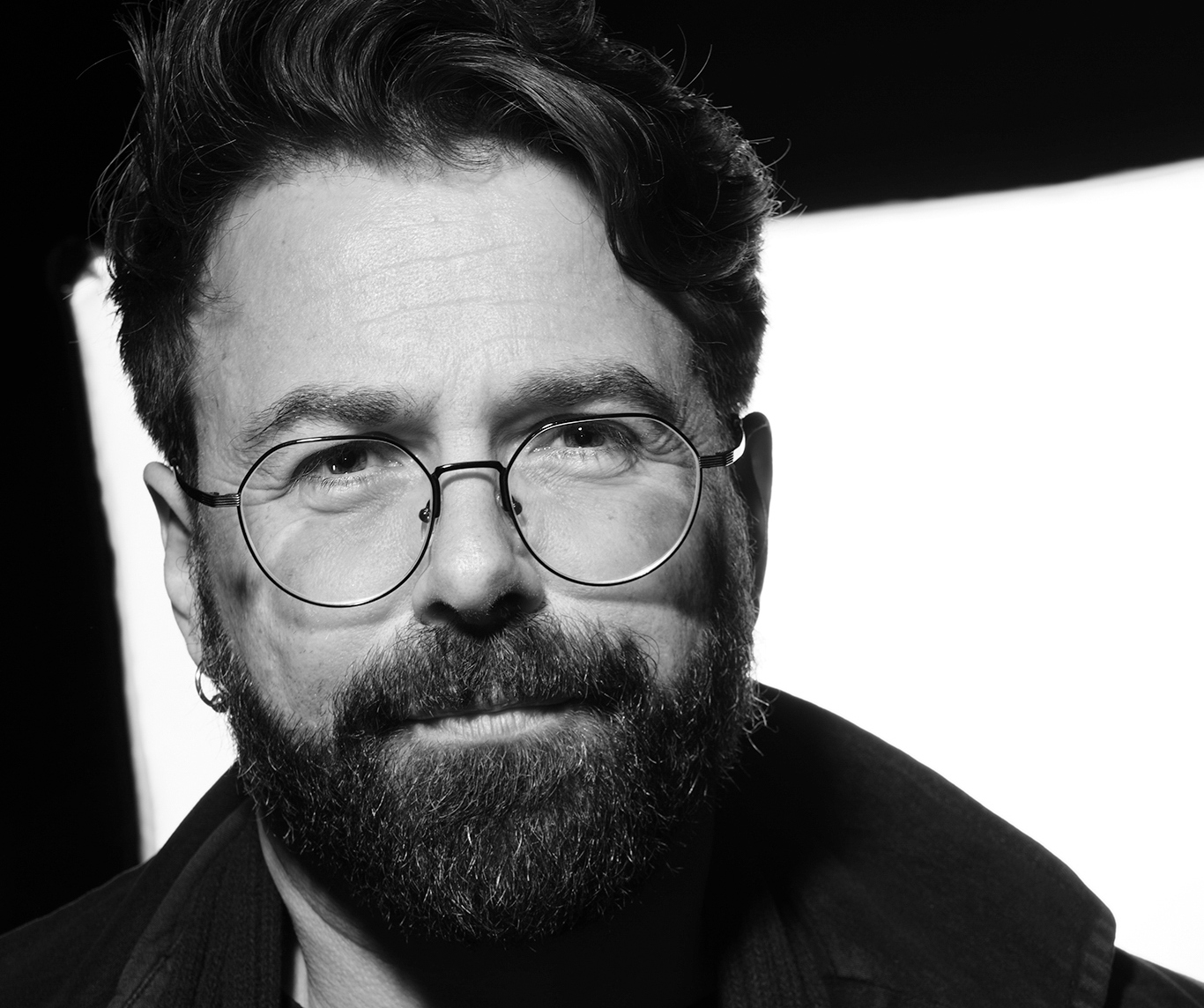
Writes: Andrea Matošević
It must have been humid—very humid—that day in the Coyoacán borough. And sticky. Moisture clung to everything and hung in the air, a dampness that turned breathing into a conscious act rather than a reflex. Rain had just also washed the Avenida Viena street, but brought no desired relief. Summers in Ciudad de México are warm and rainy—la humedad es terrible e insoportable. In the study of the house settled at street number nineteen—a house with a large and verdant courtyard that, at that moment, feels more like a prison of internal exile than a private sanctuary of freedom—an unkempt figure sits at the desk, clad in an off-white, short-sleeved linen shirt unbuttoned to below the chest. At 5:19 PM, he picks up his black prescription glasses. He first cleans the left lens, after which—following an ingrained workday routine—he reaches for the right, the dirtier one. Before him, on that same wooden desk, lie three texts; two of which will have to be finished by editors, aware of the importance of their publishing: Stalin: An Appraisal of the Man and His Influence, Documents of the Fourth International and The Testament. The cardboard protective covers of the texts are soaked through with moisture along the edges, yet that matters little at the moment, for the author will not manage to finish them anyway, just as he will not manage, after wiping the left lens of his prescription glasses, to clean the right, the dirtier one. Both his hand and his intent will remain, at least for one more long moment, suspended in the air on that sultry 20th day of August, 1940.
In the brief text that Lev Davidovich Bronstein—better known as Trotsky, the Soviet revolutionary, politician, and theoritician—did manage to complete—a text finalized six months prior to that dramatic August, its title, The Testament, simultaneously signifying a testament, a farewell and a coming to terms with one’s own evanescence—he would underscore this very point: “My high (and still rising) blood pressure is deceiving those near me about my actual condition. I am active and able to work, but the outcome is evidently near.” In this context, the etymological closeness—indeed, the kinship—between the nouns testament and testis should perhaps not be treated as a mere coincidence. Rather, it is more accurate to view them as a lived contradiction reflected in the inseparability of pleasure and suffering, joy and torment, inception and evanescence that psychoanalysis has had so much to say about in the past century. Yet, Trotsky’s high and rising blood pressure—a cardiovascular ailment—remains, at that moment, proof of life. Given the unenviable circumstances in which Stalin’s enemies find themselves, likely also a symptom of a good, yet agitated and worried life. High blood pressure is a testament to the presence of a certainty regarding one’s own imminent evanescence. He will be killed—as it is known—by a blow to the back of the head with an ice axe by Ramón Mercader, a man whose surname in Spanish denotes merchants and trading. Although he—as we know—readily expected the peddling between the contractor and the contractee with his head as the stake, Trotsky’s Testament nevertheless highlights a statement—an almost contradictory motto for a man sentenced to death: Жизнь прекрасна. We are, of course, familiar with the translation and acknowledge its consequences; its contemporary, somewhat gentler and Oscar-winning media version is a global phenomenon: Life is Beautiful. La vida es hermosa. La Vie est Belle.
Roberto Benigni sets the action of his film La vita è bella in roughly the same period that the drama was unfolding in the Coyoacán borough of the Mexican capital. Once again, as with The Testament, we must consider the tone of its utterance. The conclusion is all-encompassing, binding, powerful and sharp, but devoid of any superfluous enthusiasm. It is read—and likely lived—without the rush of adrenaline and infectious optimism that, for instance, a spirited version ending with an exclamation mark would imply. We accept this dry version; it appeals to us. We perceive it more as existentialist irony or cynicism thrown into the world than as the effect of some twelve-step self-help bestseller. So, where do the smiles, humor, and jokes in La vita è bella come from? The games and playfulness amidst a hell where “death” for the more fortunate ones—as concised by a survivor when describing the fatal diagnosis of swollen feet (dicke Füsse)—“began with the shoes”? Although director and actor Roberto Benigni attempts, with humor and laughter, to shield the audience from the horrors of the Lager through playfulness and feigned optimism—just as he does his on-screen son, Giosue Orefice—some of the answers to these questions are nonetheless offered by his slightly older compatriot in the work Se questo è un uomo.
In his memoir, the survivor Primo Levi cites the fundamental condition for survival in a place he viewed as “a great machine to reduce us to beasts” by promptly adding “precisely because [of this], we must not become beasts”. The daily practice of washing in dirty water without soap, walking with good posture, cleaning one’s shoes—actions that are utterly “useless” within the context of life in Auschwitz become the very things that restore humanity to the enslaved and emaciated . And yes—trista gioia and sorriso triste—the sad smile and joy to which he refers were a reflection of the power to “refuse one’s own consent” regarding the place to which they had been condemned. Perhaps it is precisely in that heightened space of the oxymoron, of forced and feigned laughter or joy, that one should view the figure of Guido Orefice, Giosure’s father; he laughs or plays with his son, again and again, precisely because he cannot, and must not do so. Guido Orefice and Primo Levi tell us precisely that: if you wish to survive and preserve your life—even in a place where it has already been taken from you, a place where you are already dead—you must not consent to your own evanescence. If death truly began with the shoes, life was perhaps preserved in the corners of the lips. Has Primo Levi not—on the opposite track—skillfully presented in his works an entirely new ontological figure of the twentieth century? A broken figure of acquiescence whose emergence demands from humankind new explanations regarding the horizon of existence; new and unsettling definitions of life and death? The Müselmanner, the drowned, an anonymous mass and category of non-humans too drained of life to truly suffer. He hesitates to call them alive, hesitates to call their death “death”. La vita, anche lei bastarda, era pure quella.
There is a contemporary coincidence between the desert and the concentration camp. Both expand excessively. And just as Lagers must be deliberated on as deserts of subsistence, deserts, too, can be deliberated on in terms of biopolitical Lagers. That is precisely how the Sonoran Desert on the US-Mexico border functions—as both weapon and poison. This gratuitous natural “killing machine” deters Latin American emigrants from their intentions or forces them to subsist in the impossible conditions of one of the hottest places on Earth. And Sonora, like Earth itself, is growing hotter due to global warming—and increasingly challenging for survival. The consequences of such politicization of nature are widespread death and suffering. And the emergence of certain new global Ramón Mercaders—peddlers—who, from the United States of America to the Mediterranean, from Greenland to Iran, from Palestine to Ukraine, will utilize entirely new, more subtle and deadlier weapons. The new global order is merely another name for that sharp, lethal instrument. Forms of nausea, anxiety, panic attacks, fear, or burnout are immunological responses to the testimonies and experiences of a world that at present bears the mark of a testament. Yet, that response is also a refusal of consent—a refusal to accept and ratify it. Life is not merely beautiful. Trotsky knew this; that is why he added the following sentence at the end of The Testament: “Let the future generations cleanse it of all evil, oppression, and violence, and enjoy it to the full.”
And it will be humid—very humid—that day at the base of Monte Zaro. Yet, moisture will not cling to everything nor hang in the air, and breathing will come easily. Late autumns in Pula are gentle on the airways. In the courtyard of the imposing building at 1 Leharova Street, we will nonetheless stand bundled up in coats and scarves. We will remove our black prescription glasses that keep, again and again, sliding down our noses. Through them, we see the world thrown at us with great clarity. We feel hypertension and cardiac arrhythmia. We feel more than restlessness; we sense that this could be trista gioia. We first clean the left lens, after which—following an ingrained workday routine—we reach for the right, far dirtier one. Warm breath, punctuated by strong heartbeats, fogs up the prescription lens. Both our hand and our intent will remain, at least for one more long moment, suspended in the air on the 27th day of November, 2026.
We will call that moment the ever-open possibility of the beauty of life.
