
27th November - 6th December 2026
9:00 - 21:00
House of Croatian Defenders
Leharova 1, Pula
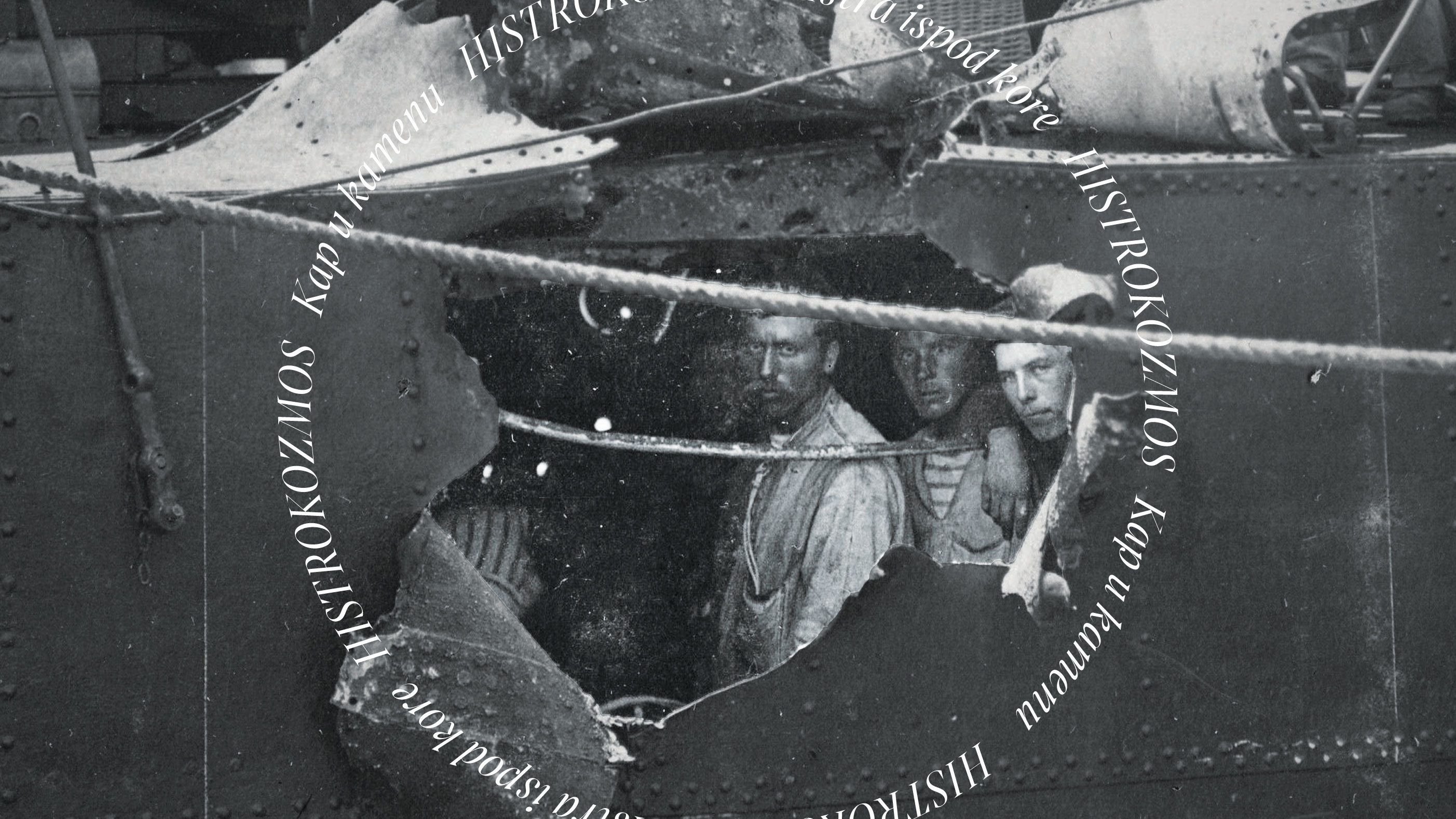
Authors and artists who have made powerful and unique contributions in the fields of culture, art, science, and the economy and have placed Istria and Pula firmly on the map of Europe and the world form the central creative force of the 3rd Histrokozmos. This year’s fair within the fair will be especially marked by an encounter between Istria and Pula with Šibenik and the Šibenik region *The poster for this year’s Histrokozmos is designed by the Pula-based designer Matko Plovanić.
The character of today’s Istria, along with its strong cultural and artistic radiance, is at the heart of this year’s 3rd Histrokozmos, an important programme within the 31st Book Fair(y) in Istria, to be held from November 28 to December 7 in Pula. Authors who have taken bold and original steps in culture, art, science, and business, and who have inscribed Istria and Pula on the cultural map of Europe and the world, stand at the core of the Histrokozmos programme. This year’s fair within a fair will be marked by the meeting of Istria and Pula with Šibenik and the Šibenik-Knin County. The stages of Histrokozmos events will be set at the House of Croatian Homeland War Veterans, the Pula City Gallery, and Cvajner Gallery.
„This year’s Histrokozmos turns its focus toward Pula and Istria through the presentation of works and authors who have shone brightly and left a lasting mark on the artistic and scientific legacy of our region. Among them are two figures whom Pula lost too soon: we will present a work from the scientific legacy of the linguist, lexicographer, university professor, writer and academic Goran Filipi (1954–2021), the revised and expanded edition of Betinska brodogradnja: Etimologijski rječnik pučkog nazivlja (Betina Shipbuilding: An Etymological Dictionary of Folk Terminology, published by Hrvatska sveučilišna naklada and Betina Museum of Wooden Shipbuilding), as well as the photo-monograph of Tonči Pavlinović (1974–2024) Pogled iza horizonta (The View Beyond the Horizon, published by Tondak and StudioLab), edited by Paola Orlić. Along with the photographs taken around the world by the travel enthusiast, musician, and adventurer Tonči Pavlinović, the book also features his travel prose. The premiere presentation of Tonči’s book on Saturday, November 29, the opening day of Histrokozmos, will be dedicated to brotherhood and love between the people of Pula. The event will also feature the presentation of a book by Dejan Pavlinović, a multi-award-winning haiku poet, who will, alongside his latest poetry collection Lines of Life (Tondak), present the previously unpublished poems dedicated to his brother Tonči”, announced Magdalena Vodopija, director of the Book Fair(y) in Istria.
Vodopija points out that a special place in the Histrokozmos programme belongs to Mladen Lučić Luc, art historian and one of the most prominent contemporary art critics in Croatia, who has left a profound imprint on the artistic scene of Pula and Istria. On Sunday, November 30, as part of the programme Vita, vita, his recently published book with a strong title Nos u oko (Nose in the Eye, published by Meandar Media) will be presented, offering a selection of his art reviews. Luc is also the curator of the exhibition of young Istrian painters titled Perspectives, opening the same day at the Pula City Gallery. The exhibiting artists include Marina Rajšić, Elena Kiss, Marko Človek, Rino Banko, and Nina Turina.
Histrokozmos once again proudly presents the remarkable Sakramenske – the powerful women of Istria. They are actually their own, out of the ordinary, awesome women in the most positive sense, and their intellectual, scientific, artistic, and sport achievements are astonishing. Among them are the distinguished entrepreneur and biologist, the owner and director of Aquarium Pula and founder of the future Maritime Museum, Milena Mičić, the director of the Ethnographic Museum of Istria, Ivona Orlić, celebrated Istrian poets Nada Galant and Loredana Bogliun; the ethnomusicologist and anthropologist Ana Hofman; and artistic photographer, architect, and choir director Edna Strenja together with the members of her choir Praksa. Once again, the Sakramenske won’t be alone; this time, they’ll be accompanied by their gallant knights, the winemakers of Istria
„In the Vita, vita programme of Histrokozmos, we are marking twenty years since a lexicographic miracle took place in Istria in 2005, celebrating two decades since the publication of the Istarska enciklopedija (Istrian Encyclopedia). Following this encyclopaedic venture came the creation of Istrapedia, and this year’s publication of the Istarski biografski leksikon (Istrian Biographical Lexicon), released by the Čakavian Parliament in Žminj with the support of the Istria County, continues this fascinating story, showing just how much has been accomplished in Istrian lexicography over the past twenty years. To mark this anniversary, we are organizing a roundtable Twenty Years of Lexicography in Istria, featuring Vlaho Bogišić, a renowned lexicographer and writer and one of the initiators of the Istrian Encyclopaedia, the academician Robert Matijašić, who, together with Miroslav Bertoša, worked as the chief editor and is now editor-in-chief of the Istrian Biographical Lexicon, historians Igor Duda, the executive editor of the Istrian Encyclopedia, and Maurizio Levak, a long-time head of the Istrapedia project, as well as Josip Šiklić, secretary-general of the Čakavian Parliament in Žminj and executive editor of the Istrian Biographical Lexicon. The moderator will be Aljoša Pužar, who will host Robert Matijašić at the Breakfast with the Author event on the final day of the 31st Book Fair”, announced Magdalena Vodopija.
The participation of Šibenik and the Šibenik-Knin County at Histrokozmos is presented under the title Kap u kamenu/A Droplet in the Stone. Alongside the promotion of the dictionary by the academician Goran Filipi, who through his life and work made a strong connection between Istria and the Šibenik-Knin region, this partner programme will include the presentation of the monograph Droplets of Stone: A Lexicon of the Beauty of the Šibenik-Knin County and a photography exhibition by Igor Tomljenović at the Cvajner Gallery. Šibenik’s delegation will also bring the book Stari Šibenik: kalama, skalama i butama (Old Šibenik: Through Alleys, Stairs and Arches, published by AGM) by the librarian and key cultural figure Milivoj Zenić, presented by Zdenka Bilušić and Kruno Lokotar. The city’s vibrant cultural scene will also be showcased in A Drop in the Stone through the Šibenik Fortress of Culture, the Collective 4B, and the Fališ and Škure festivals. Šibenik winemakers will also present their wines within this programme.
A Droplet in the Stone programme will be coordinated by the much-loved writer and journalist Emir Imamović Pirke, a familiar face to Pula audience. He is also the author of the essay New Faces of Arsen’s Homeland, where he explains why Šibenik and its region, as this year’s partners of Histrokozmos present themselves in Pula through books, exhibitions, and their authentic cultural and oenological scene, concluding: „The heart of Dalmatia belongs to the heart of Istria”. Pirke opens his Šibenik story with verses by the great Arsen Dedić (1938–2015):
„She spent the night on the road / long travelled by our dreams / from Perković through Knin / towards the world. In her eyes the sea, / salt shimmering in her hair, / she won’t let herself be broken / defies and resists”, wrote and sang the self-proclaimed member of the society of (unsuccessfully) cured Šibenik natives, the great poet and equally great composer Arsen Dedić. A brilliant, sharp-witted cynic, he was born and raised in a city whose narrow streets, stairways, and arches were once walked by Vice Vukov, Ivo Brešan, Stjepan Gulin, Aljoša Antunac, Dražen Petrović, Mišo Kovač, Vesna Parun, Aleksandar Guberina, Milivoj Zenić, Drago Putnjiković…Today, through those same alleys, stairs and arches, sometimes, or even daily walk Leon Lučev, Goran Višnjić, Oriana Kunčić, Ivan Klarić, Olja Runjić, Ivica Tucak, Danira Nakić, Maksim Mrvica, Zvonimir Vila, Aljoša Vuković, Tomislav Ćeranić, Pavle Roca, Jasenka Ramljak, Zdenka Bilušić, Antonija Modrušan, Ante Filipović Grčić, and all the way to Slobodanka Boba Đuderija, whom her family visits in Split just to remind her that „Šibenik is the capital of Croatia, and whoever thinks otherwise knows nothing, and of course they don’t know anything, because they’re not from Šibenik…”
The grand finale of Histrokozmos will also be the closing event of this year’s Book Fair, where Noel Šuran will present his book Naš kanat (ni)je lip: tradicije tradicijskog glazbovanja u Istri (Our Song (Isn’t) Beautiful: Traditions of Traditional Music-Making in Istria, published by Ethnographic Museum of Istria). The celebration will end in true Istrian style, with singing in tanko i debelo (traditional Istrian multipart singing) and live music.
This year, the sales section of Histrokozmos will take an honorary place at the entrance to the House of Croatian Veterans, next to Mozart Café. Istrian publishers and books about Istria from Croatian publishers will be featured there. Visitors will toast to books at the IQ Istrian Quality stand, and once again, the Wine Tales continues with sommeliers from the Croatian Sommelier Club, offering tastings of Istrian and Šibenik wines.
The author of this year’s Histrokozmos poster is Matko Plovanić, a long-time collaborator of the Fair.
„I used a part of a photo from Pula’s history as the template for the poster of the 3rd Histrokozmos. Unlike the original, where the focus was on the officers on deck, here it has been shifted to the ordinary sailors below, who may have accidentally entered the frame through a hole in the hull of a ship from one of the former empires that once ruled this area. Although they are the first to suffer in the games of the powerful, they probably ended up before the lens by chance, serving the photographer as extras and the viewer as a measure of the scale of damage. That, to me, is Istria, often resembling a film set, where the small people from below the deck increasingly become accidental extras”, explains Matko Plovanić.
To recall, Histrokozmos was founded two years ago at the 29th Book Fair(y) in Istria, and represents the idea initiated by Boran Kalčić and Magdalena Vodopija. This year it has a new programme board consisting of Eric Ušić, Edi Cukerić, Dunja Ivičić, Matko Plovanić, Lara Manzin Grganja, Jan Franjul, and Iris Mošnja.
