27th November - 6th December 2026
9:00 - 21:00
House of Croatian Defenders
Leharova 1, Pula
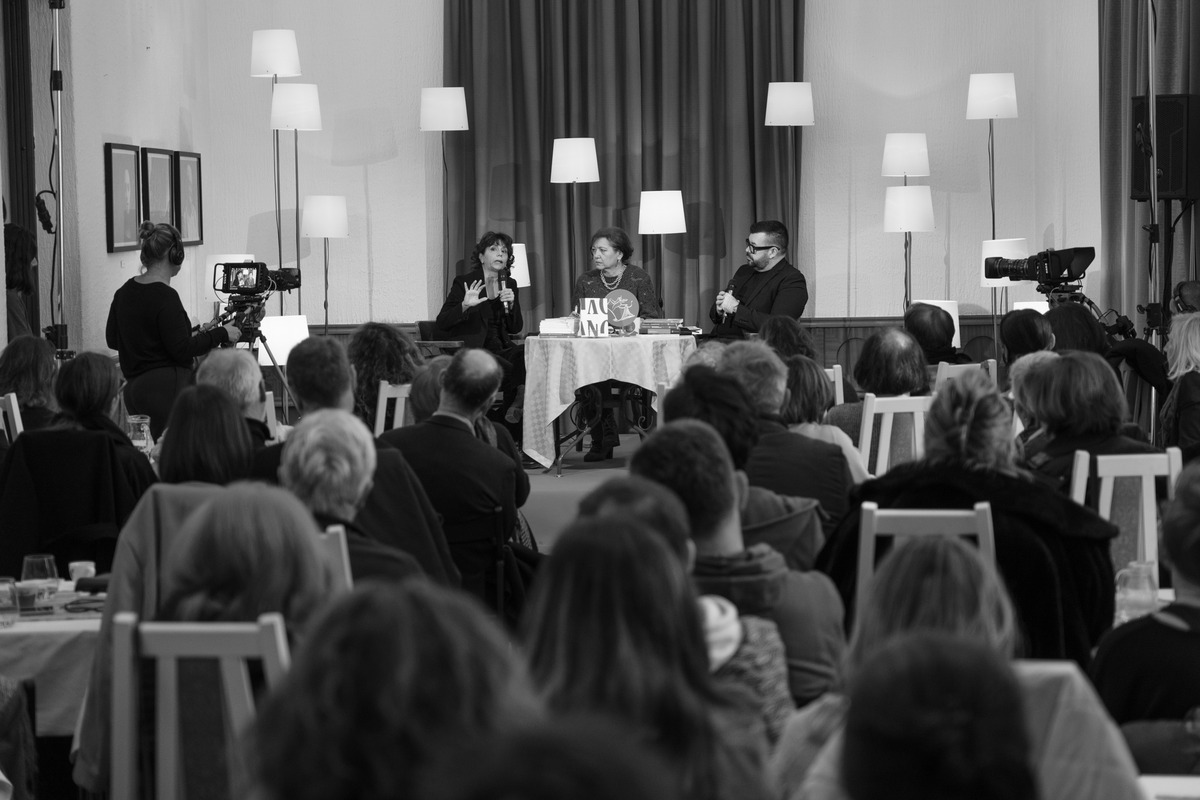
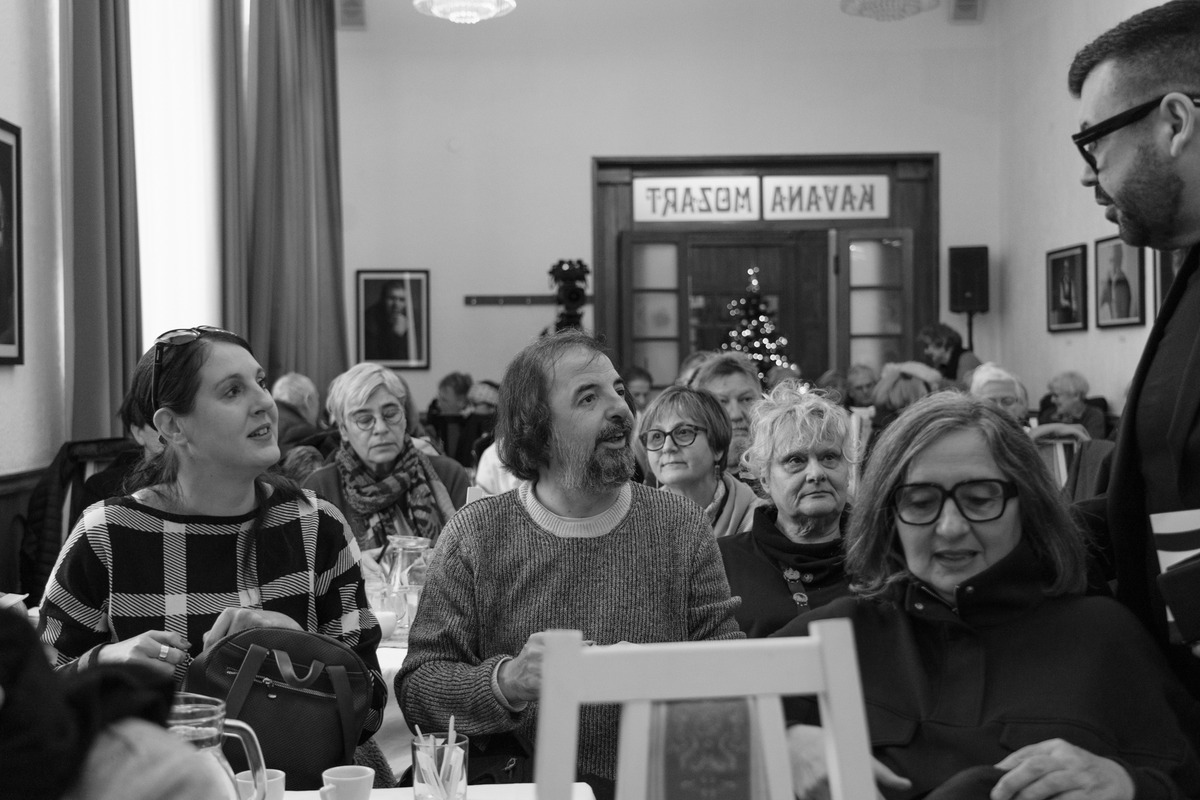
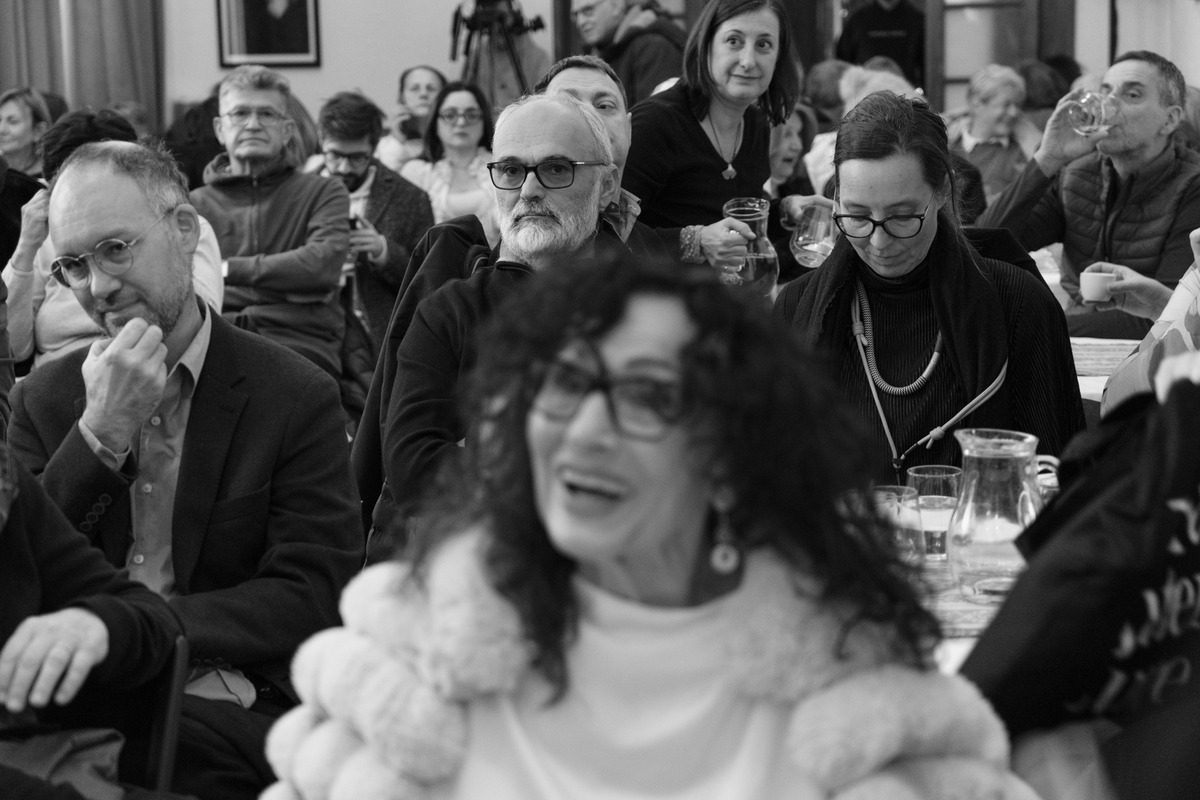
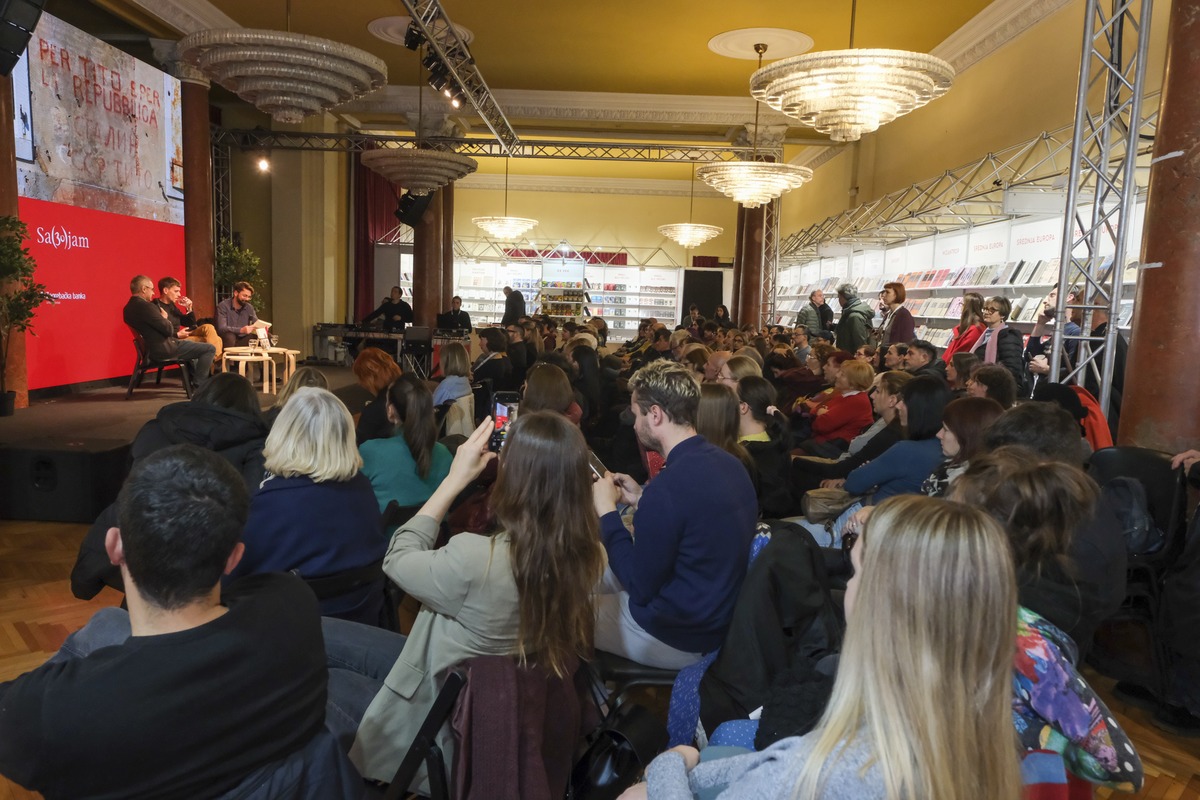
For more than five minutes, the Pula audience applauded, standing in ovation to honor the Italian philosopher Donatella Di Cesare, a distinguished guest of the 30th Book Fair(y) in Istria. It happened at Café Mozart in the House of Croatian Homeland War Veterans, during Sunday’s Breakfast with the Author, and the intensity and duration of the applause could rival those of a grand theater performance. A Professor at La Sapienza University in Rome, Donatella Di Cesare has also, among other things, taught at the University of Heidelberg, was a student of Hans-Georg Gadamer, and socialized with the French philosopher Jacques Derrida. After the publication of Martin Heidegger’s Black Notebooks, she resigned from her position as Vice President of the Martin Heidegger Society. At that moment, she chose a third path, and in her philosophical analysis, she termed Heidegger’s antisemitism as metaphysical antisemitism. One of the topics of interest of her scientific research also concerns the philosophy of migration, and from this perspective, she remains sceptical of the idea of liberal hospitality in contemporary Europe.
“It is high time for philosophy to return to politics, to the polis—to return to the city. The great problem of our time is oikonomia, which denies the polis and the politics that strive for equality. It produces a distorted, economized polis that transforms itself into a blood kinship community. The mafia long ago realized it should stay away from politics; it is interested solely in financing the oikos and blood kinship communities,” explained Donatella Di Cesare, who in her philosophical reflections on modern society also uses the term cryptoracism—for people who are racists yet believe they are not. In short: Donatella Di Cesare deservedly earned the title of the first Sakramenska of the 30th Fair—a woman who brilliantly illuminated the Fair’s microcosm and delivered one of the most powerful Breakfasts with the Author in the program’s history. Her excellent companions were moderator Aljoša Pužar and translator Iva Grgić Maroević.
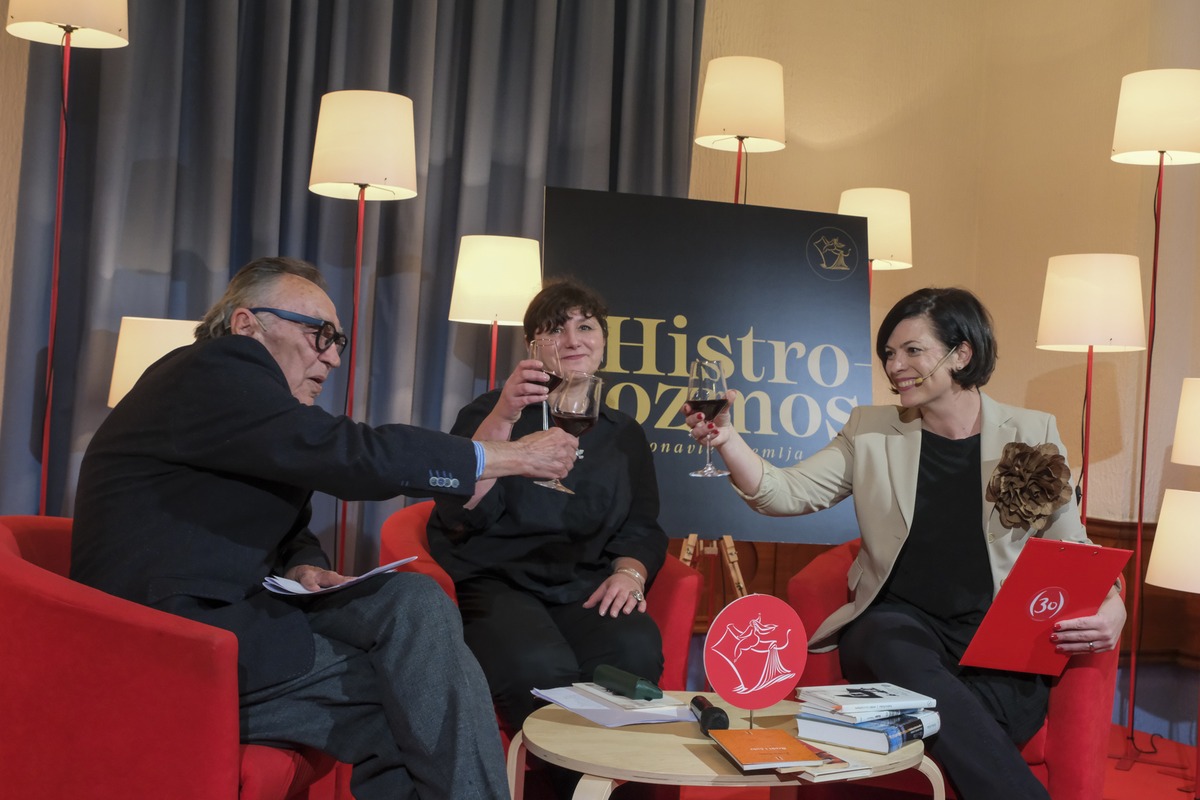
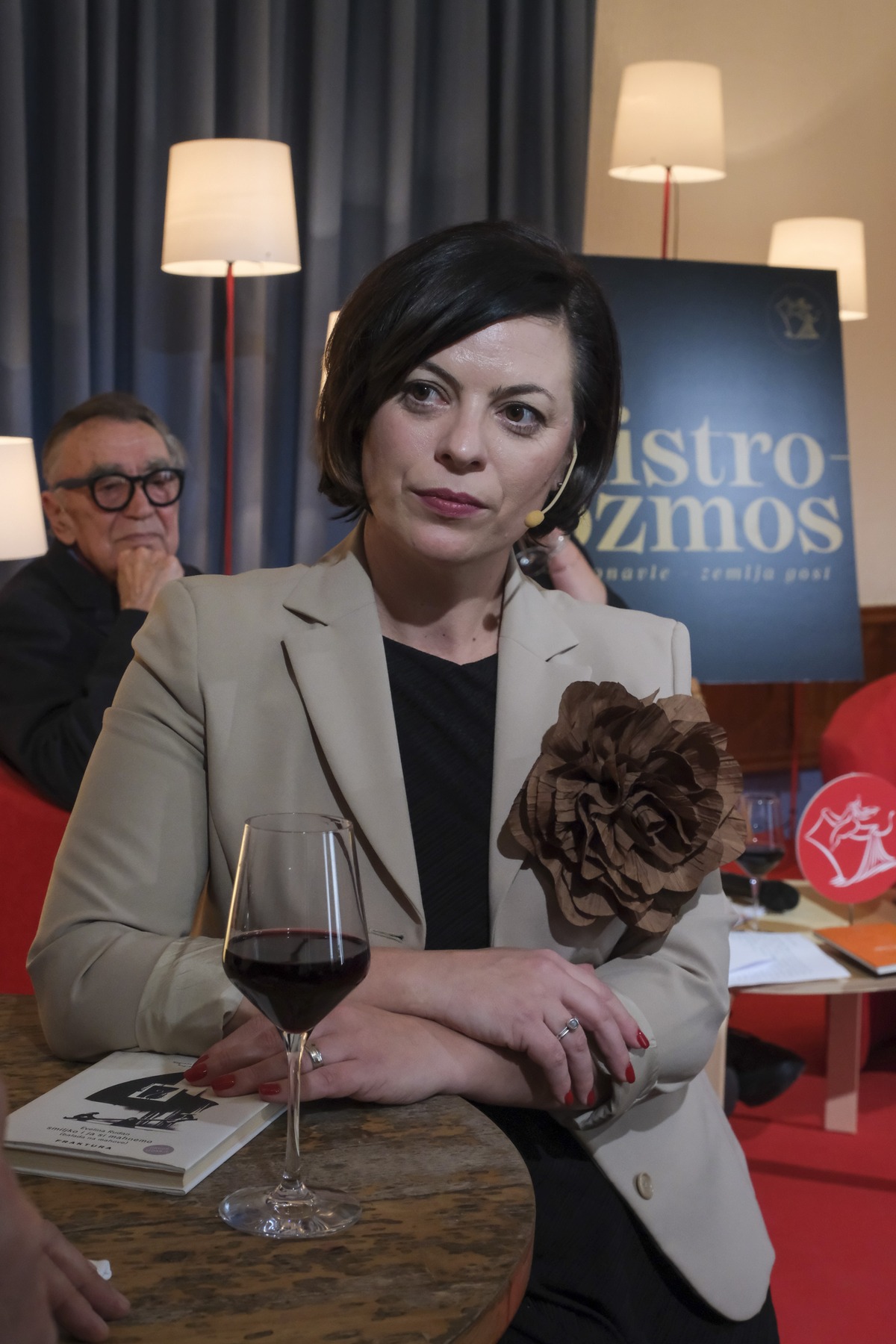
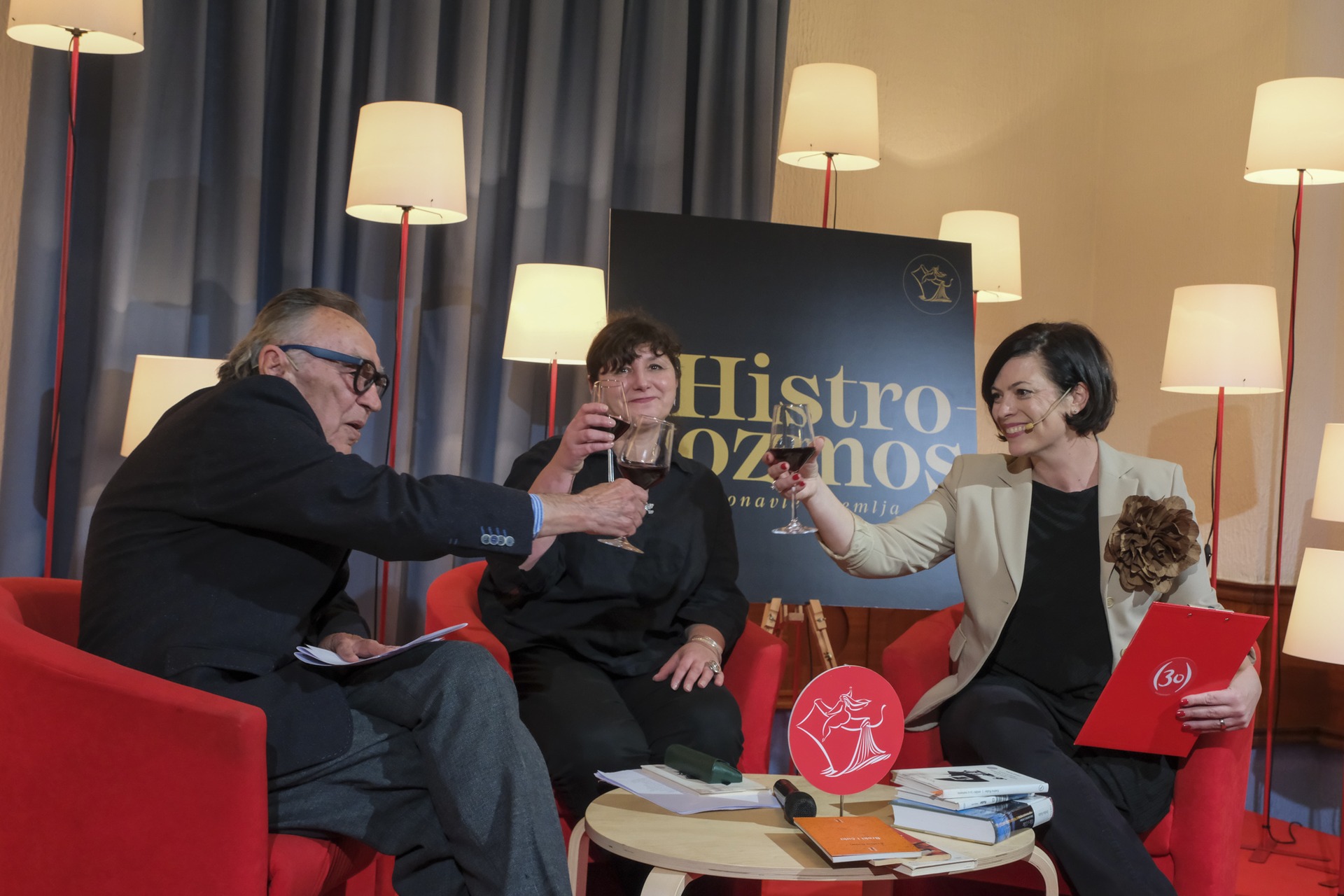
Anyone who has ever met the poet and scholar Evelina Rudan or experienced her work knows precisely why she was chosen as the first Sakramenska woman of the new Histrokozmos program, which presents powerful women who create and shape the identity of Istria. With her astonishingly realistic, postmodern, and emotionally charged poetry, Evelina carved new emotional furrows into the fair’s microcosm and moved the Fair’s audience to tears. She read from her poetry collection "Smiljko i ja si mahnemo" (Smiljko and I Wave to Each Other, published by Fraktura), and gifted the audience new love and erotic poems. For her, Sakramenske are “both intelligent and must possess certain audacity to recognize themselves as such,” and she recognizes them by what they have done for culture. Her own are Vilma Zohil Unukić, a long-time secretary of the Chair of Chakavian Parliament, and the poet Zdenka Višković Vukić. Evelina’s knight at Histrocosmos was Boro Sirovica, who presented his wine Ground Zero, a teran aged in Georgian amphorae buried in the Istrian soil and stone, in Rakalj. “Above all, it’s a wine of friendship. This wine helps us poetize reality,” said Boro Sirovica, who is both an IT expert and a long-time protector of the Fair—an “honorary title,” he explained, that means being “a perfect man, a blend of Aljoša Pužar and Emir Imamović.”
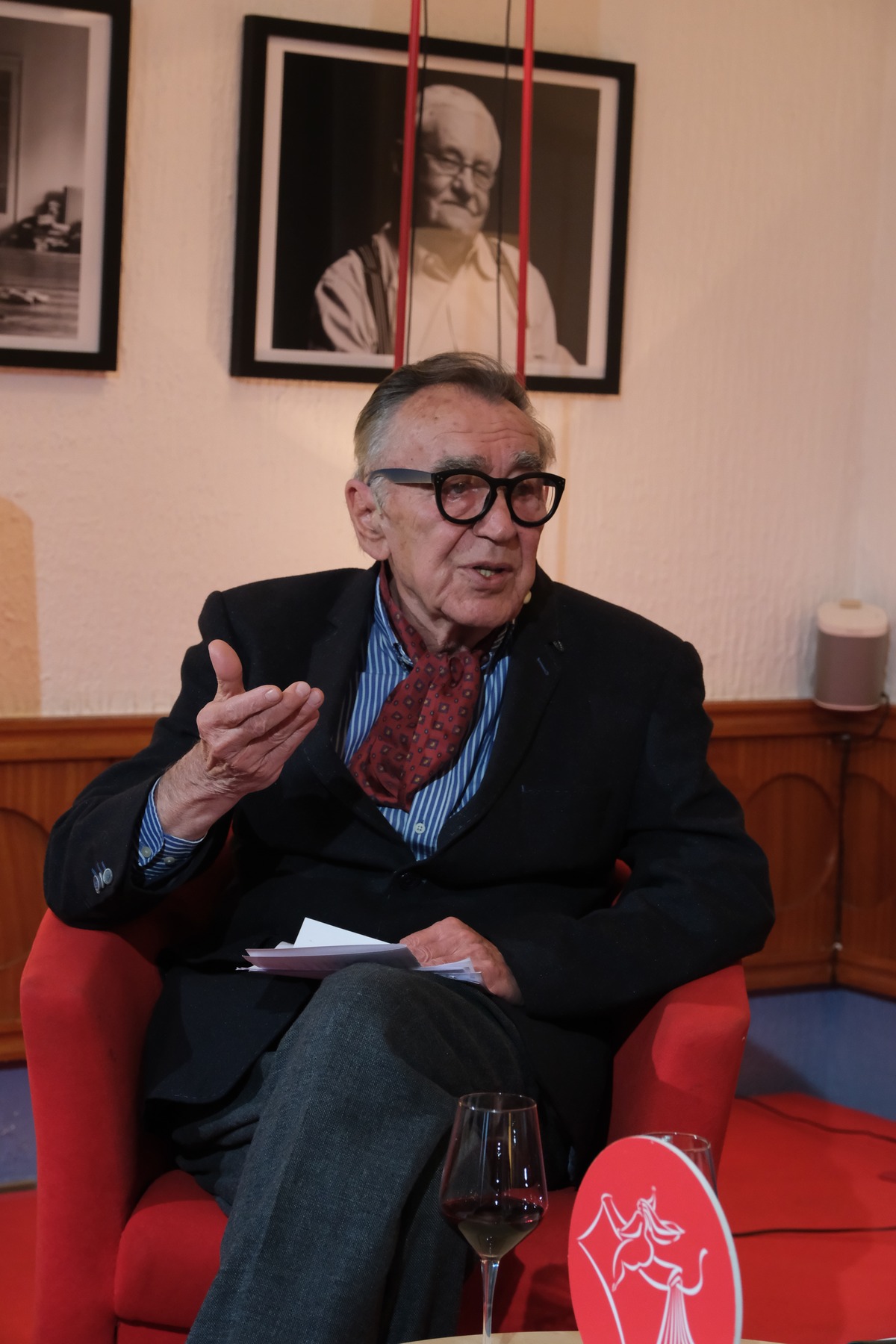
The hosting duo consisted of the gentle and composed scholar and drama pedagogue Iva Đorđa Nemec and the bard of Istrian culture, Milan Rakovac. He explained that while Sakramenska in the religious context bear negative connotations disrupting the sacred order, in the context of life, a Sakramenska woman embodies all seven holy sacraments. His own sakramenske include his nonna and the great Marija Crnobori, as well as all the women who led the cultural revolution in Pula in the 1970s - Jelena Lužina, Gorka Ostojić Cvajner, and Nelida Milani - joining the lineage of Giuseppina Martinuzzi, Alida Valli, and Laura Antonelli.
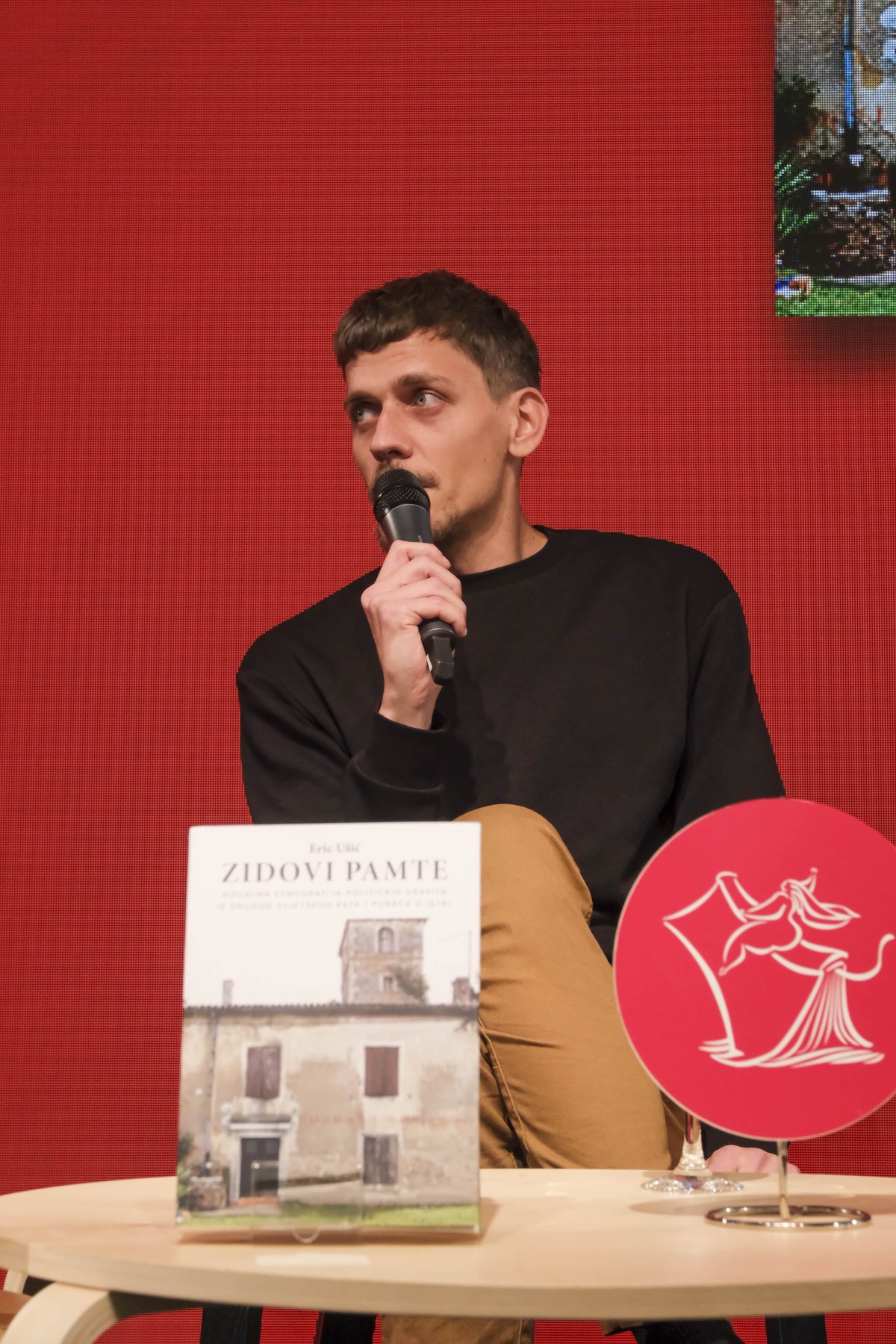
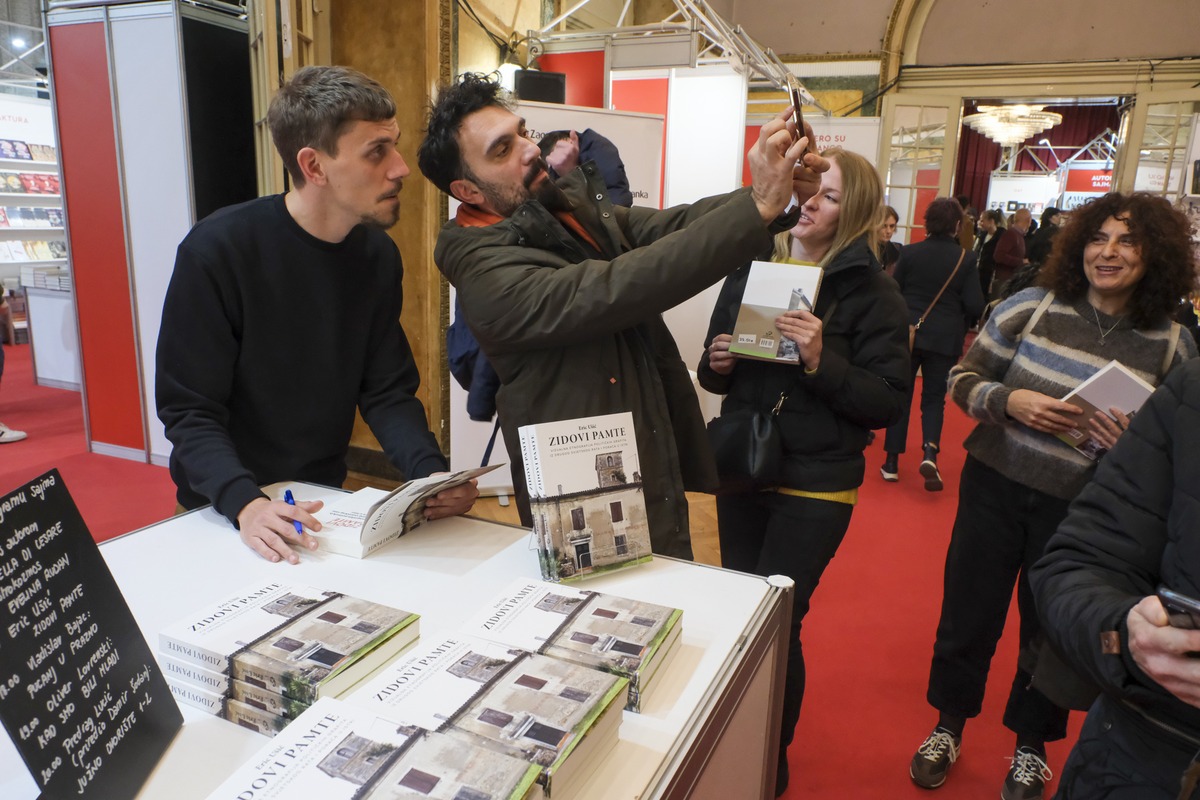
In continuation of the Histrokozmos, the program Istria Unearthed, featured the book of the cultural theorist and film artist Eric Ušić, Zidovi Pamte (The Walls Remember, published by Srednja Europa), which, according to the editor Damir Agičić, was originally his doctoral dissertation in English about graffiti in Istria created during World War II and the post-war period.
“The idea for this research arose in Vodnjan: just twenty meters from my house, there was graffiti on a wall that said Viva Stalin, and a few meters further, Tito… Like many in Istria, I used to merely notice graffiti, but five or six years ago I decided to study them. What followed was a so-called ethnography of proximity, when a researcher suddenly perceives what was previously unseen, and then came fieldwork,” explained Eric Ušić who, in this important book, among other things, recorded informants' testimonies about the way graffiti was created and the risks faced by those who inscribed anti-fascist slogans.So, for example, in and around Labin, graffiti was written while authors were wearing cavate - cloth shoes - to keep their illegal nocturnal work silent under fascist surveillance. “Graffiti are highly indicative of socio-economic movements. They are more prevalent in the interior of Istria, in small, remote villages with very few inhabitants, while the situation on the developed western coast of Istria is different,” Ušić noted, pointing in particular to the graffiti that emerges fragmentarily from under renovated facades.In the Twilight Reading session, the writer Vladislav Bajac presented his novel Pucanj u prazno (A Shot into the Void, published by Geopoetika), and the promotion started with a fantastic 12-minute film by Boris Miljković, in which he testifies of a three-member crew, including Bajac, who travelled from Belgrade to the USA in 1984 and captured the key fragments of American pop culture. It is a testimony to 1980s New York, prophetically foreshadowing the modern era. There stands the legendary Chelsea Hotel, featured on the book cover, and its eccentric residents. The film, serving as a kind of witness to the book, opens with Leonard Cohen, and features Allen Ginsberg, David Byrne, and faces from the world’s most famous TV and production companies. Bajac himself appears in the film, saying: “I remained the only visualist in literature. A story is a unity of all the times we witness in life, and that’s what I love most in literature—connecting the unconnectable.” The book Pucanj u prazno was discussed by Boris Dežulović, Emir Imamović Pirke, and the book’s editor Zoran Paunović, who said: “This book is much greater than itself: a travelogue, a metaphor, a fiction, and essayism… all merging into the form of a novel.” Incidentally, Boris Miljković and his young crew are again filming a documentary about the Fair this year, and the photographer of the Fair, the master of artistic photography Tanja Draškić Savić, whose portrait exhibition is part of the 30th Fair, contributed to the project.
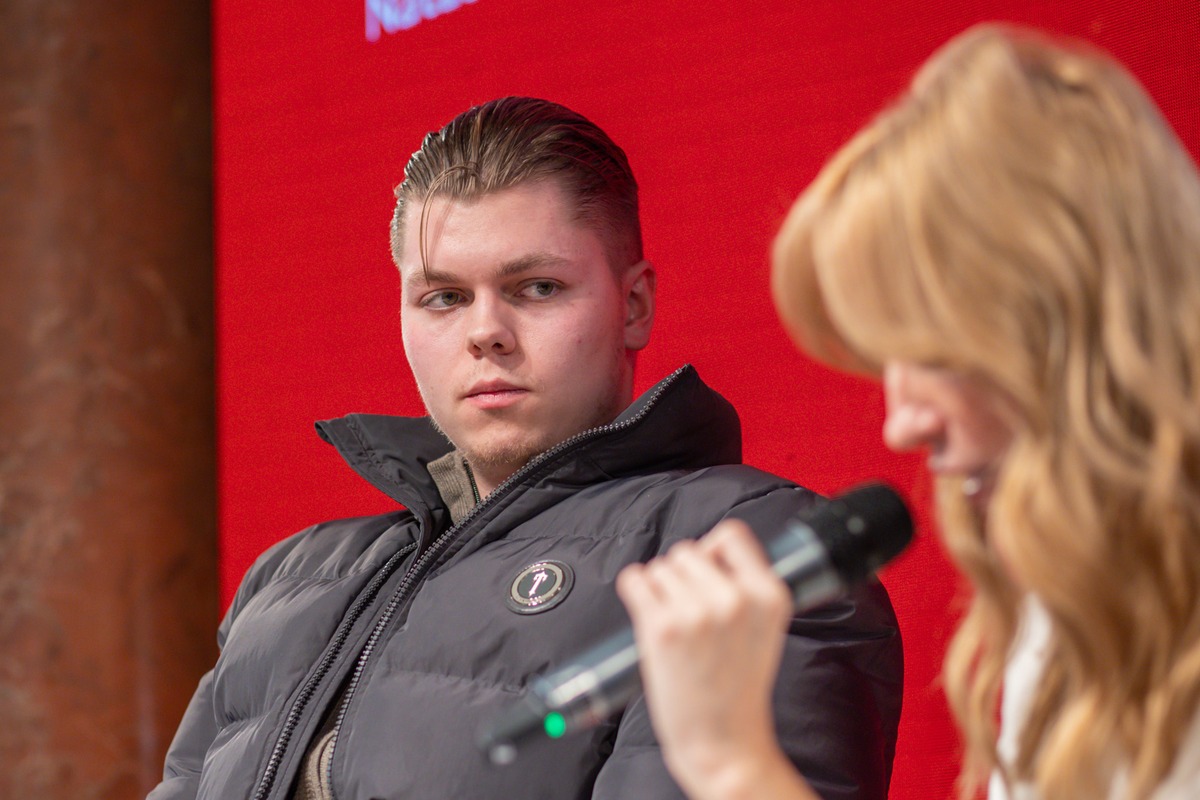
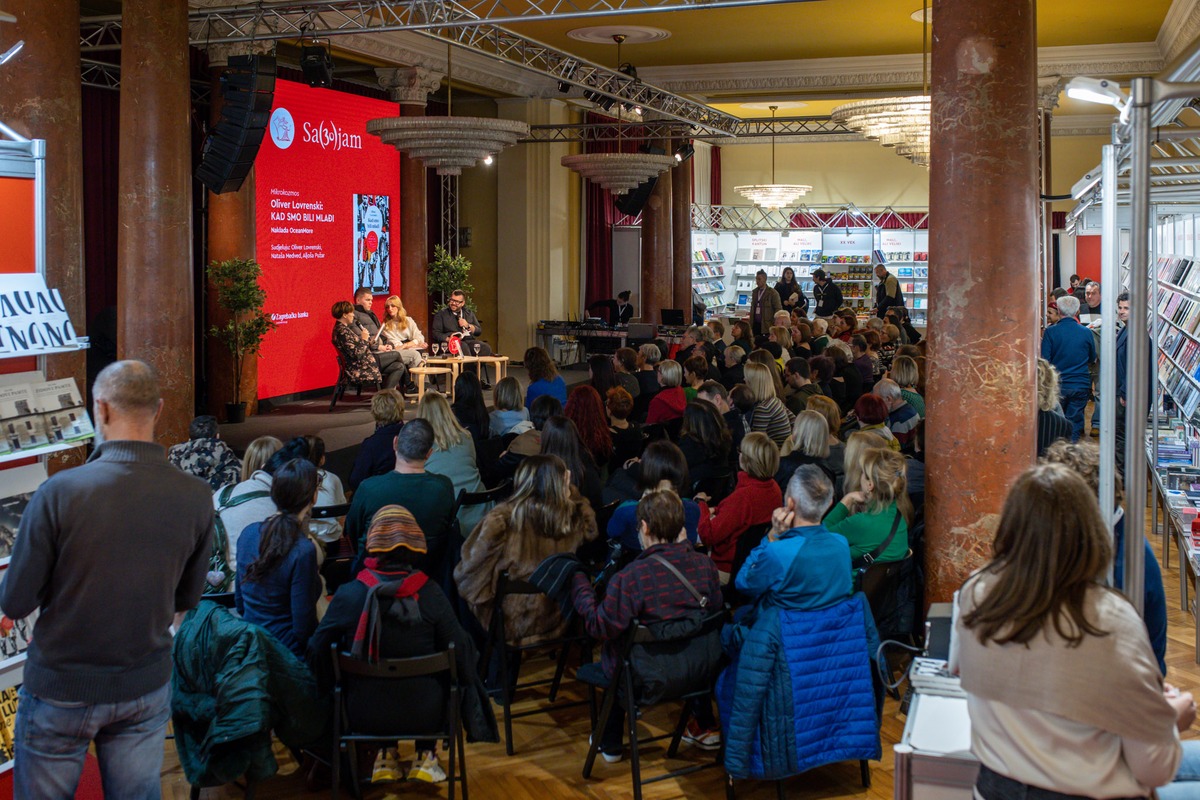
The generational microcosmos of youth was illuminated by Oliver Lovrenski, a young Norwegian writer of Croatian descent, his grandmother hailing from Krk. He is also the author who gave the most interviews at this year’s Fair. His debut novel Kad smo bili mlađi (When We Were Younger, published by OceanMore) tells a generational story of four young men on the margins of society, mired in drugs and crime in the suburbs of Oslo - some of whom escape, some do not. The book has captivated readers and critics across Norway and Europe. Judging by reactions, Oliver Lovrenski’s sincerity and composure charmed the Pula audience as well.“Oliver Lovrenski has written a book about his generation. It’s a story from the very center, in the eye of a hurricane, written in the authentic language of the youth,” said the editor Nataša Medved, emphasizing that his book offers a different perspective on young people, who “have dreams but lack hope.” “I always loved reading; I started when I was four years old, and at seventeen, I began to write. Writing helped me deal with my emotions. I wrote down my thoughts, feelings, and experiences, and at one point I realized that if I didn’t tell the story of my generation, someone else would. So, I told our story.” said Oliver Lovrenski. He noted that, at only twenty and writing a book at nineteen, it’s still hard for him to talk about feelings and how to show emotions, or to distinguish vulnerability from weakness. He stressed that writing is important to him and that he still writes every day. Many young people have told him his book was the first they ever read, and he hopes it will encourage others to continue reading. He believes that young people must be encouraged to write, but it must happen organically, never by force.
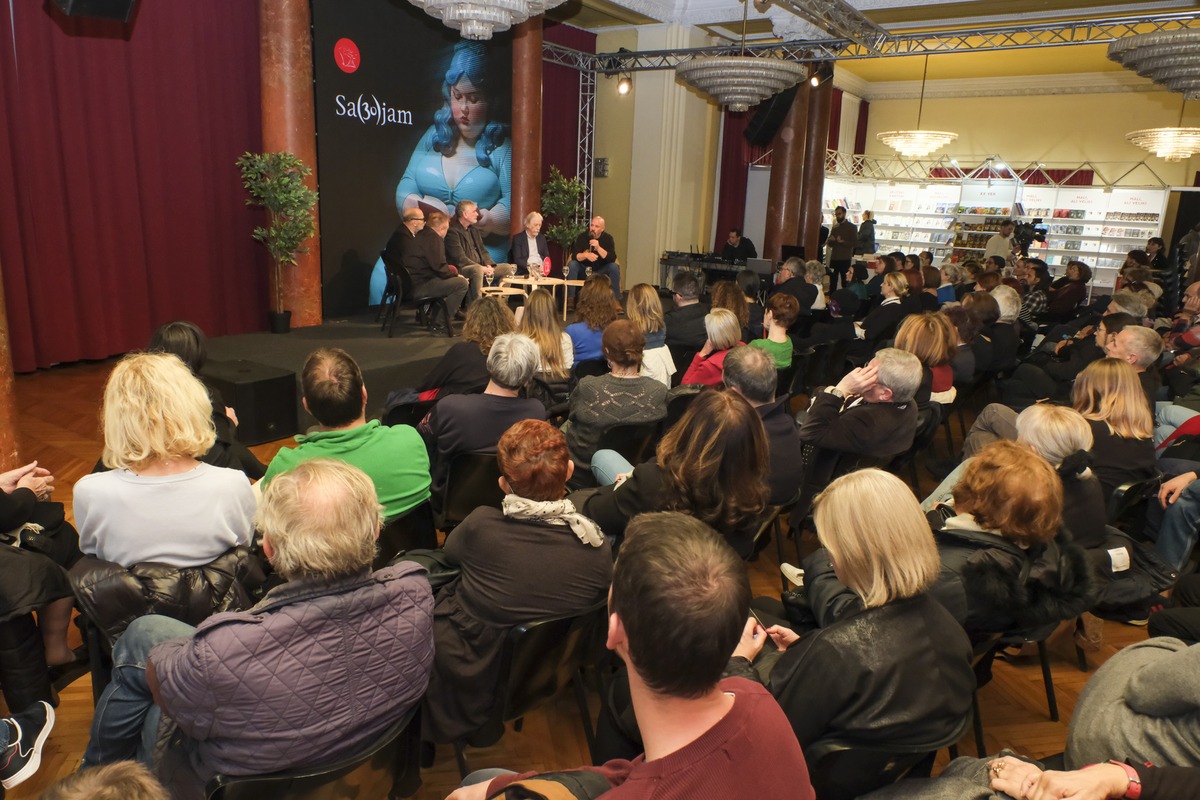
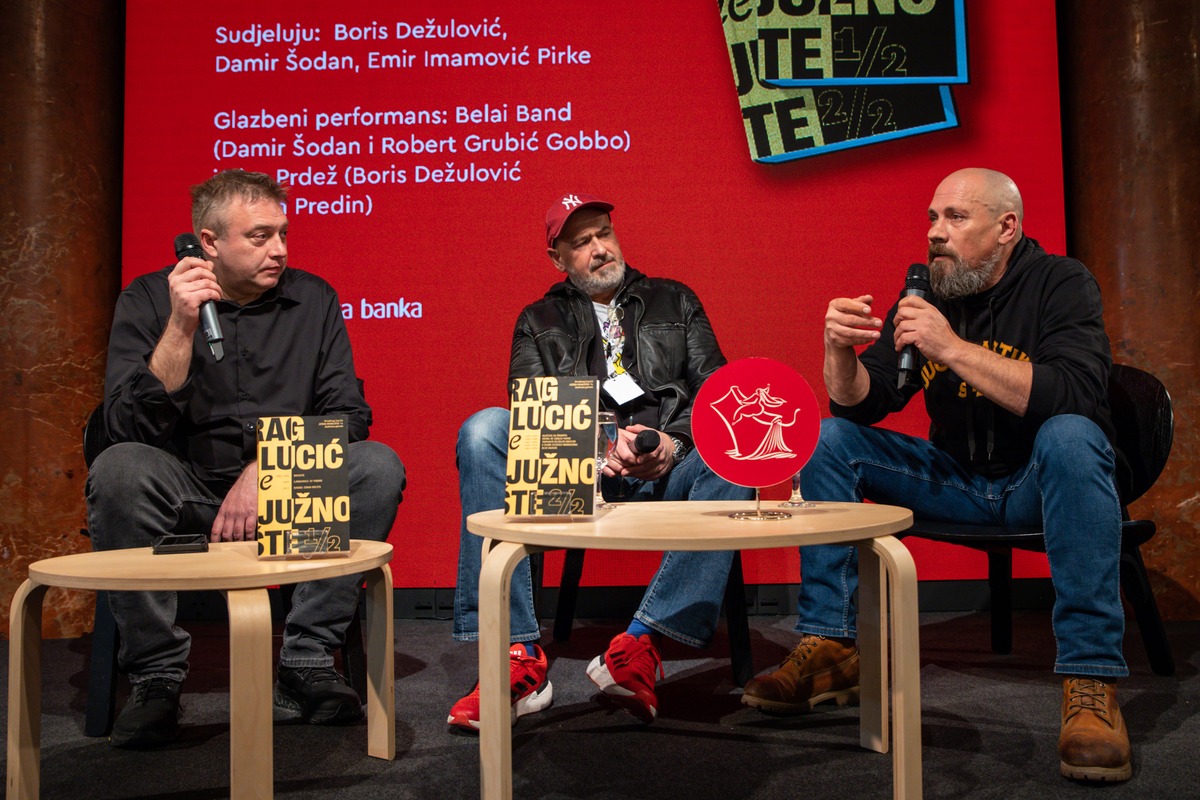
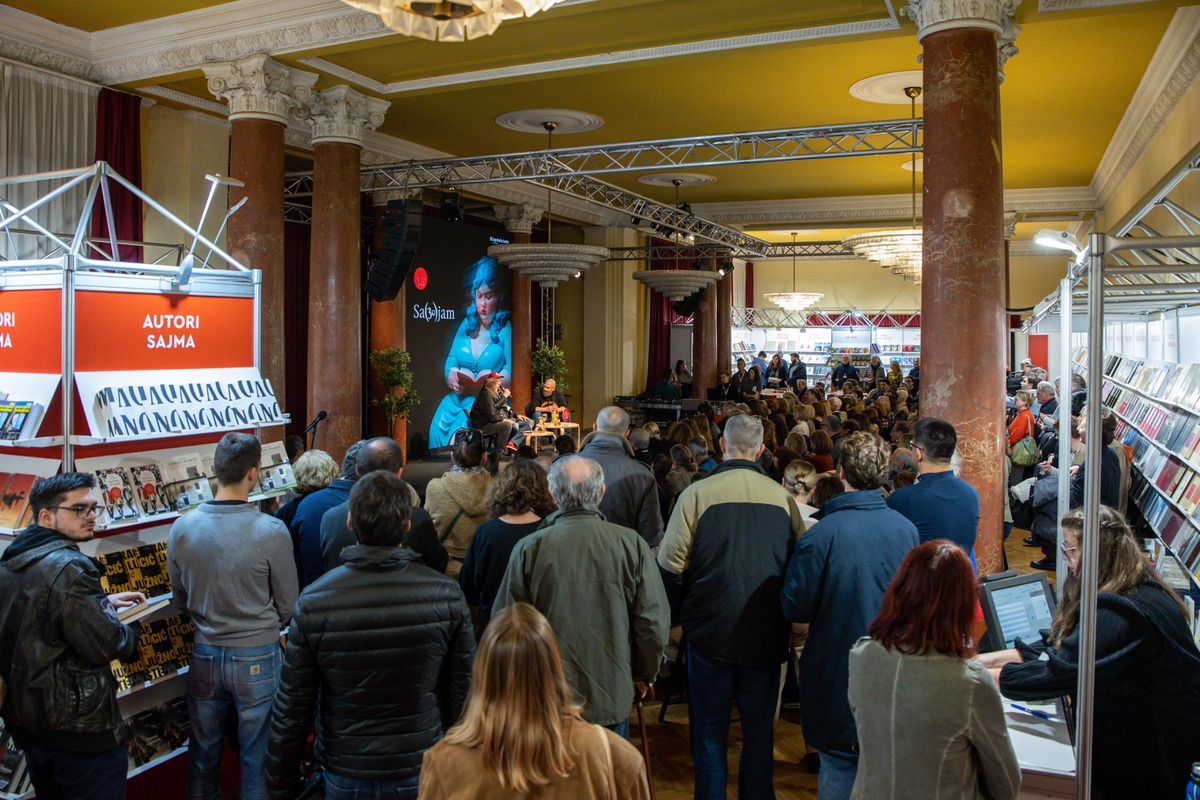
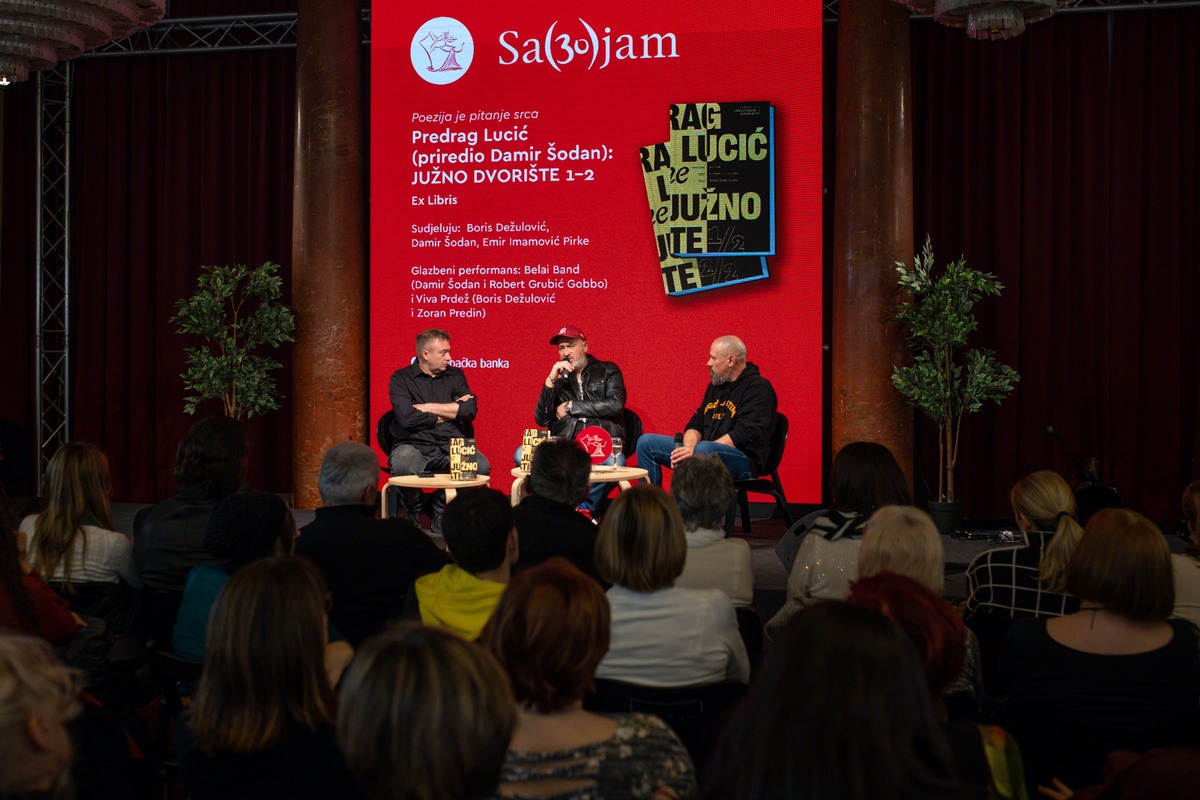
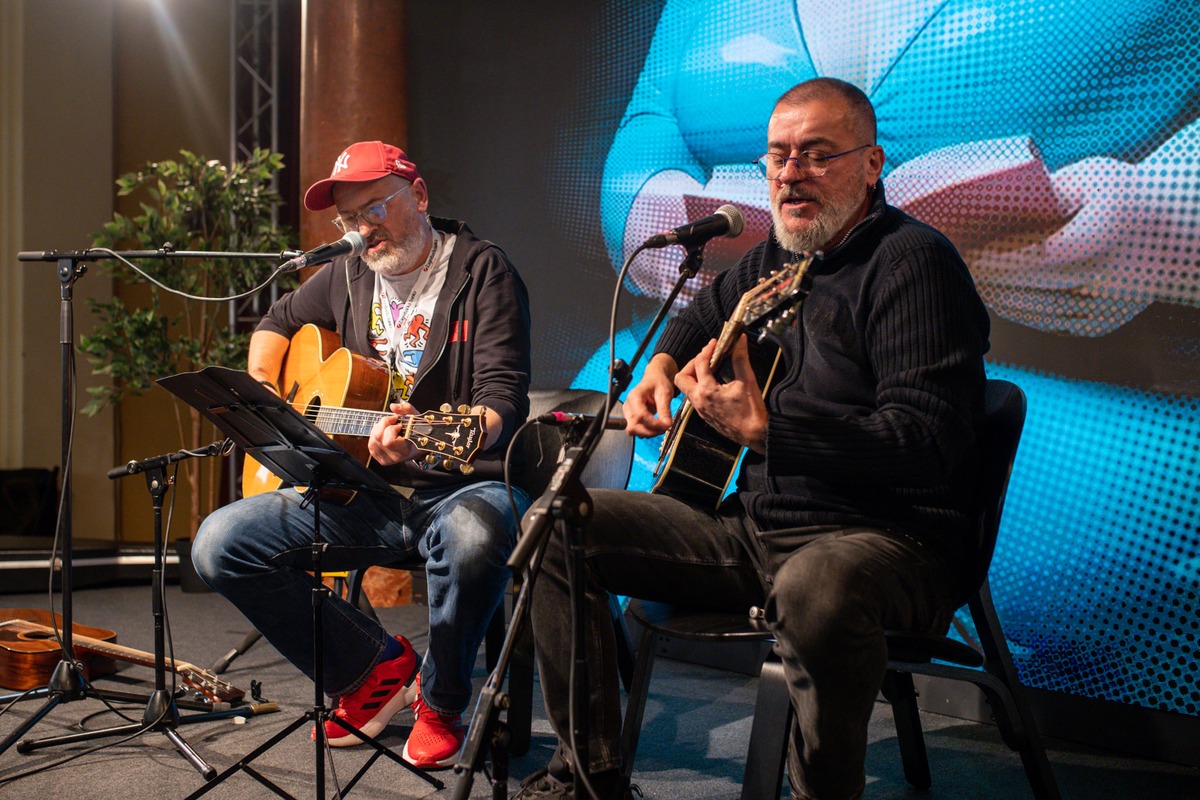
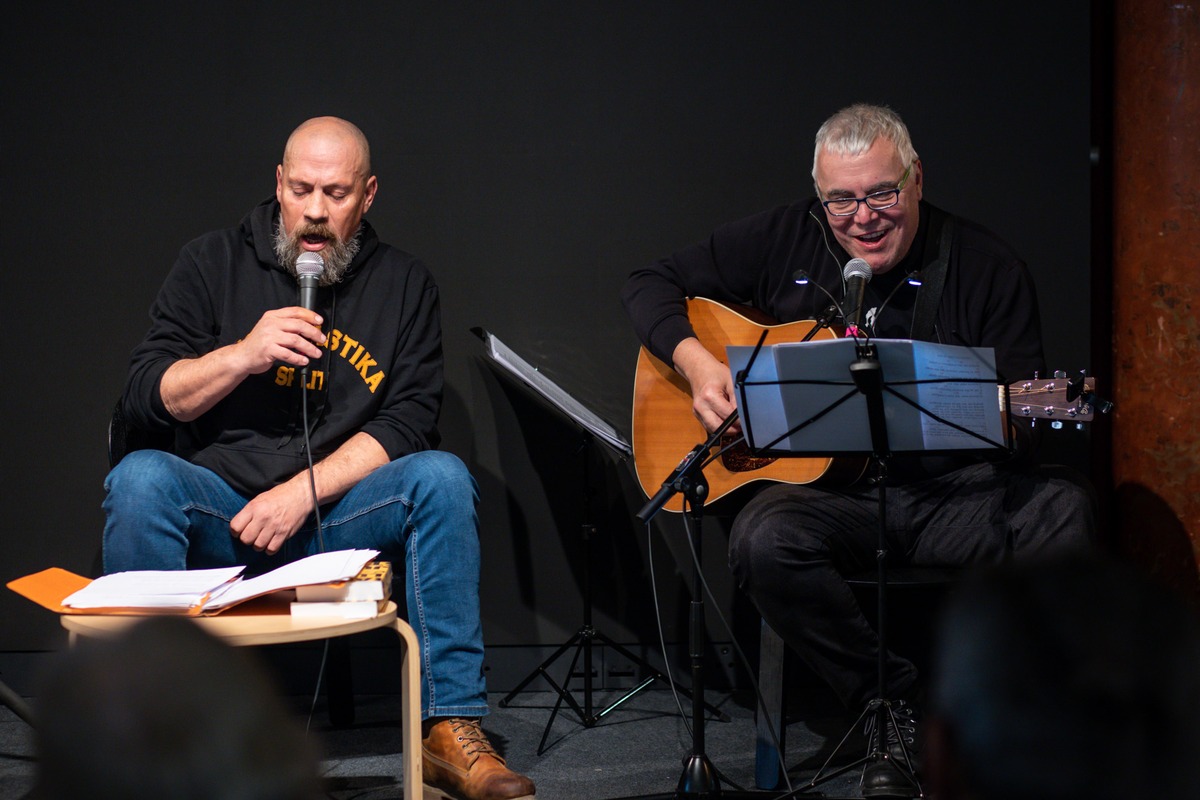
The most attended and longest program of the Fair’s third day, lasting late into the night and concluding with concerts by Belai Banda (Damir Šodan and Robert Grubić Gobbo) and Viva Prdež (Boris Dežulović and Zoran Predin), was dedicated to Predrag Lucić, the most beloved author the Fair has ever had. His poetry collection Južno dvorište (Southern Courtyard 1-2, published by Ex Libris) was presented within the program Poetry is a Matter of the Heart. Damir Šodan, who prepared the book from Lucić’s archive, said it was his karmic debt to a friend who introduced him to the world of books. “I laughed and cried with him while reading his verses, which are the zenith and synthesis of experience,” Šodan explained, adding that Lucić ended up in the Hague after all. “Predrag was a unique figure when it comes to playing with canon: every parody of his is organic, and I am very glad that we are now discovering the serious poet Lucić, an incredible poet who, already at 16 or 17, was writing mature poetry.” said Boris Dežulović.