
The New Faces of Arsen's Hometown
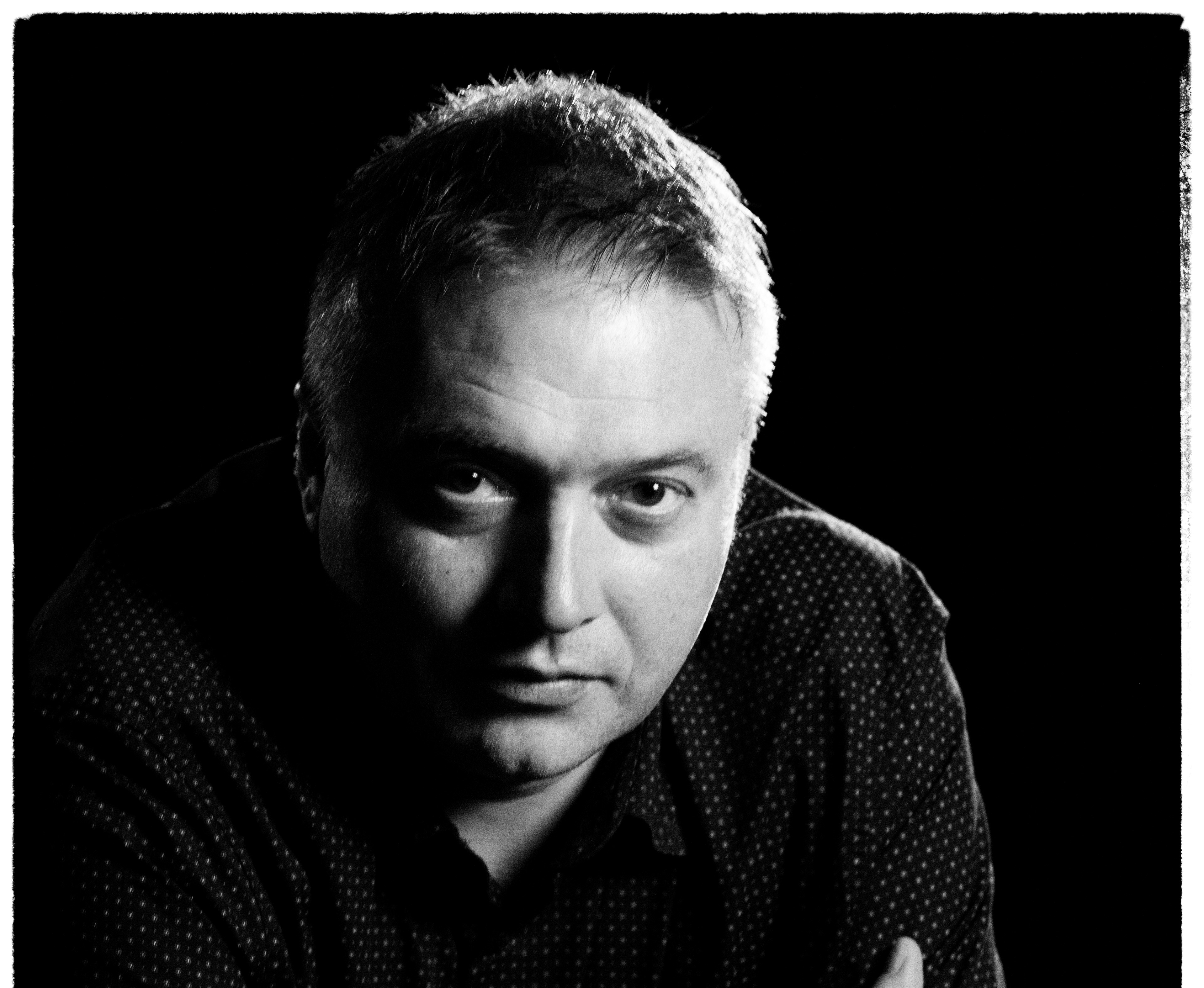
Author: Emir Imamović Pirke
„She spent the night on the road/ since antiquity traversed/ by our dreams on their way to the world/ from Perković to Knin/ With the sea in her eyes/ salt shimmering in her hair/ she will not be broken/ she struggles and defies”, sang, and before that, wrote the self-professed member of the society of (unsuccessfully) treated sons of Šibenik, the great poet and equally great composer Arsen Dedić (1938 – 2015). This inexorably witty cynic was born and raised in the city on whose narrow streets (kala), steps (skala) and passages (buta) trod the likes of Vice Vukov, Ivo Brešan, Stjepan Gulin, Aljoša Antunac, Dražen Petrović, Mišo Kovač, Vesna Parun, Aleksandar Guberina, Milivoj Zenić, Darago Putnjiković…
Today, from time to time, or from day to day, these same kala’s, skala’s and buta’s are graced by the likes of Leon Lučev, Goran Višnjić, Oriana Kunčić, Ivan Klarić, Olja Runjić, Ivica Tucak, Danira Nakić, Maksim Mrvica, Zvonimir Vila, Aljoša Vuković, Tomislav Ćeranić, Pavle Roca, Jasenka Ramljak, Zdenka Bilušić, Antonija Modrušan, Ante Filipović Grčić, all the way to Slobodanka „Boba“ Đuderija, whose family come from her home town to visit her in Split, just to remind her that “Šibenik is the capital of Croatia, and whoever says otherwise hasn’t got a clue, which is only logical, since their not from Šibenik”.
If there’s even such a place that, from the perspective of the citizens of Šibenik, can even hope to match their hometown’s beauty, they are all to be found, of course, in Šibenik-Knin County – Krka, Kornati, Skradin, Zlarin, Primošten, Visovac… - or in front of the city itself, like St. Anthony’s Canal.
In a city in which the singing society is named “Kolo” (a type of circle dance), and its buildings are called “bermude”, “lying skyscraper” and “Dedinje”, everything is possible at all times, however, unlike the Bosnia of Ivo Andrić, the most probable outcome is not always the darkest one, although sometimes it seems as if any other outcome is impossible.
During the past century, this former industrial centre had no public beach, apartments in the old city centre, hordes of tourist nor movie theatres above stores selling merchandise for the masses, but it did have its International Children’s Festival, two championship winning sports clubs – the men’s “Šibenka” and the women’s “Elemes” – and aside from the figures who are still alive, also all the deceased who were mentioned above, and those who were not mentioned, but wholeheartedly deserve to be, like Jela Brešan.
Wars have official starting dates and events that precede them, but which often remain overlooked. The Homeland War in Croatia officially started in 1991, but for Šibenik-Knin County it started even earlier: August 2025 marked exactly 35 years since the first logs appeared on the road, while next autumn exactly the same number of years will have passed since the September War – the attack on Šibenik and the great defeat of war criminal Ratko Mladić, whose tanks came to the very gates of the city, but never broke through.
Peace, always and everywhere, first brings relief, and then disappointment. All that was left of old Šibenik, it seemed, was a better past, while the dismal present in no way heralded a remotely better future. The county was recovering, more physically than spiritually, from the aggression, while its capital waited for the day when it would again be a financial powerhouse, a sports colossus, notable for being the hometown of Arsen, Vice, Mišo and of a new youth which would be more interested in basketball than screens.
Instead of this former Šibenik, in its place arose a completely different one, while behind former battlefields were once again discovered natural beauties and historical landmarks which, as if it needed reminding, have no equal in all the world, and if they do, the ones in Šibenik-Knin County would still be more beautiful and significant.
There is no precise, set moment of this new Šibenik’s awakening and, consequently, of the changes in its surroundings, but two dates seem to stand out. One is, let’s say, institutionally significant, and the other, which proved that the independent culture scene can adhere to the highest production standards.
“We expect that the new library will allow future generations to, like our ancestors, correspond with all European and global intellectual and spiritual trends”, wrote the Jorge Luis Borges of Šibenik, the deceased Milivoj Zenić (1953 – 2011), on the eve of the completion of his life’s project: the housing of the “Juraj Šižgorić” Public Library in a building in the very heart of the city. From 2005 onwards, this architectural masterpiece of a fellow son of Šibenik, Ivan Vitić (1917 – 1986), houses a library which, when complimenting other, newer libraries, serves as template for librarians from other parts of Croatia, emphasizing that their libraries “were modelled after the one in Šibenik”.
Two years later, Vojislav Marković started the “Off Blues & Jazz Festival”, turning one of the numerous town squares into a majestic stage, where the visual backdrop of stunning natural beauty melded with the sound backdrop in the form of excellent music. Sadly, however, the festival fell victim to the COVID-19 pandemic.
Today, two decades later, aside from the International Children’s Festival (MDF), Šibenik has a plethora of significant festivals – FALIŠ, the Šibenik Dance Festival, Supertoon, Ship, Škure, the Croatian Travel Festival… - the independent art collective “4B” and the “Azimut” club, the public institution “Fortress of Culture” and her, in every way – therefore also in its content – impressive open-air performance venues, then there is the “Arsen” House of Art, the Centre for Winter Cultural Life, the permanent museum collection, the “Ivan Jelić” drama studio, in which, aside from demanding and award-winning children’s plays, is the setting of regular productions by students of theatre acting, directing, production and dramaturgy.
At the same time, Šibenik-Knin County has developed into a serious tourist destination which, aside from the sea and the sun, offers its interesting hinterland, national parks Krka and Kornati, but also its completely new, strong and innovative wine and culinary scene which shattered the preconception that excellent wines can be produced only in Istria, while Dalmatia is reserved for wines which are best accompanied by antacids and Aspirins.
If all this is not reason enough for Šibenik and Šibenik-Knin County to be included as partners in the “Histrokozmos” programme of the Book Fair(y) in Istria, and featured through books, exhibitions and an authentic cultural scene, as always accompanied by tasting of wines from the Šibenik region, then… There is no “then”. The heart of Dalmatia belongs in the heart of Istria.
