Mauricio Ferlin: There is too much of the Book Fair(y) inside of me
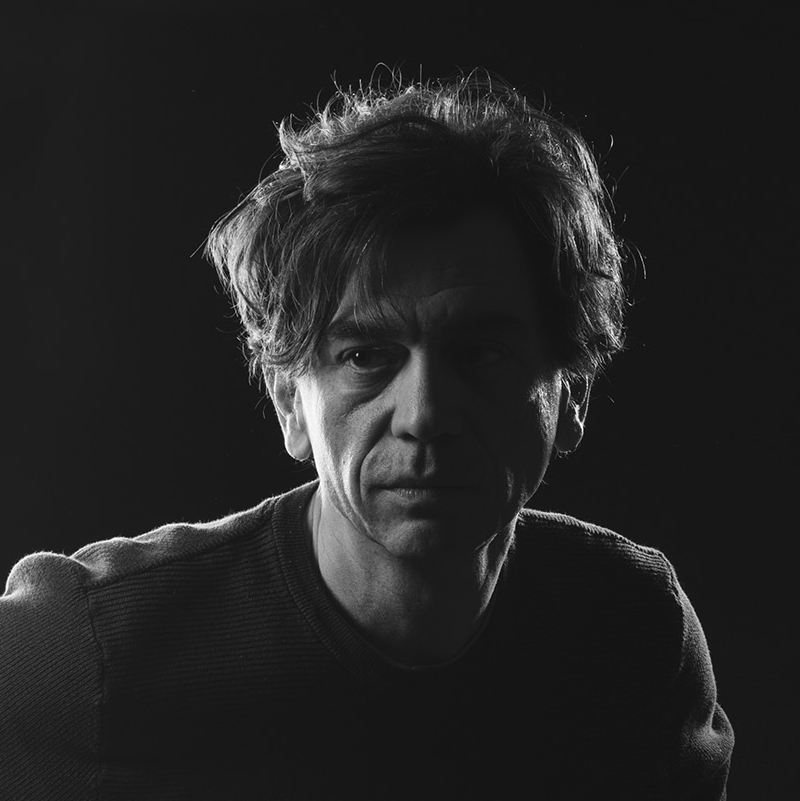
Mauricio Ferlin, a multiple award-winning designer, has been a longtime associate of Book Fair(y) in Istria. His artistic touch is deeply rooted in the visual identity and program meanders of the Fair. Among other things, he gave the Fair its name, he is the author of numerous Fair’s posters, the creator of Pufka, the Fair’s protector, who has been meditating on past experiences since the anniversary of the 30th Fair. The theme being covered at this year’s 31st Fair is Disquiets, and the creative disquiets woven into the three-decade-long fair’s imagery will be presented at Mauro Ferlin’s exhibition Fair in the Eye, which opens on November 28th at 9 p.m. at the Sacred Hearts Gallery in Pula. It will be one of the program highlights of this year’s Fair, and through installations and Fair’s memorabilia, the Fair’s phenomena that shaped the lasting history will be presented.
The Fair is contemporary art: When I was considering the concept for the exhibition marking the 30th Fair’s anniversary, I wanted the presented content to relate to the Fair’s visual history. At the same time, I sought a way to address the Fair as a cultural phenomenon - not only through works of design, painting, or drawing, but also through everything that reflects the Fair’s strong resonance and influence in a broader cultural sense. Ultimately, my intention is for the exhibition to feel fresh, and for the story of the Fair not to be merely “crammed” into the confines of biographies, chronologies, and personal recollections. That is better suited for another time and a different medium. A monograph of the Fair would address that need more appropriately. The conceptual starting point for the exhibition was last year’s jubilee, 30th Fair and the fact that this year marks 30 years since the very first Fair took place in 1995. This framework simultaneously carries certain limitations and challenges, while also raising the question: How should one even talk about the Fair? Over the course of 30 years, thousands and thousands of authors have taken part in the Fair, which has hosted an equally vast number of diverse programs. The Fair has undergone various transformations: from its early stages, when it first started taking the form of a festival, shifting between different venues, to the present day, when it constantly introduces new themes and consistently brings together a wide range of collaborators from diverse backgrounds, including artists, scientists, philosophers… Reflecting on the diverse world, I realized that an exhibition looking back at the Fair’s 30-year history through a monographic or documentary approach would be an overly ambitious undertaking, one that I was not sure I could successfully bring to fruition under the given circumstances. Therefore, I shifted my focus to the visual aspect of the Fair and to the work shared with my collaborators and other authors, and sought to look at the Fair’s 30-year history through the identification approach. In the exhibition, I will attempt to showcase the Fair’s development, particularly its early stages, when the right formula was still being sought, a question that, in fact, remains open to this day. The Fair is in a sense always conceived anew, and I believe this has to do with us, with the people who make it happen and with certain unwillingness on our part to accept things as given. Perhaps this is a matter of personality, but perhaps it is also a matter of freedom. At its core, there is always a kind of reprogramming of ourselves and of what is being done. In this sense, the Fair has, on the one hand, continuity and on the other, it is marked by a complete discontinuity, even in a visual sense. Some contemplations surrounding the Fair at the time of its creation was often closely tied to the venues in which it took place and to the kind of the live act that unfolded there. These included not only book presentations, but also performances, exhibitions, as well as numerous difficult-to-define categories and hybrid forms of performance that called for a new language of communication. The theatrical aspect of the Fair was present from the very beginning. Even the first opening ceremony at the Forum had something theatrical to it, a performative character conveyed through the use of particular signs, symbols, and space. Boško Obradović had already left a strong mark at that early stage, both through the opening ceremonies and through his creative approach to finding ways of presenting particular themes to the audience, which continued throughout the Fair’s history.
The Roots and Offshoots of the Fair: Sacred Hearts present a somewhat more challenging exhibition space, and roots and offshoots are the two terms that helped me find a framework within which I could discuss the Fair in a more concrete way. In this sense, I consider the first decade or so of the Fair to be its roots, up until its ninth or tenth edition, during which a solid model was being sought, one from which various forms and contents could emerge, each with its own visual expression, one that would later be further developed and transformed. Of course, the House of Croatian Homeland War Veterans is an important part of this story, serving as a location where the Fair, which had previously frequently changed its venues, began to settle. Moving to the House of Croatian Homeland War Veterans in 2001 brought a certain degree of stability, allowing the Fair to become part of a broader cultural landscape. It was during this period that collaborations were established with the Leipzig Book Fair and other significant festivals, and the Fair assumed the positions it has, in many ways, retained to this day. I have called the subsequent developments offshoots, because so many things at the Fair come into being, exist for a year, two or three, and then either continue to evolve or disappear. This is strongly influenced by the themes around which the programs are conceived, but also by our individual personalities, Magda's in particular. There has been no shortage of ideas over the years. I cannot say exactly why, but some things are built upon and carried forward, while others are simply abandoned, even though they were successful and yielded good results. There are some of our “inventions” such as Strip Strasse, which in its first edition at the 20th Fair, occupied the entire length of Ribarska Street in the city center. Although comics had already been part of the Fair before then, this initiative gave them a firmly established place in its programs, through workshops and events such as Hop Reading, and becoming the central theme of the Fair through Život u oblacima. The Fair has welcomed some of the most prominent comic-book artists of our time, including Daniel Žeželj, Igor Kordej, Milo Manara, and Tanino Liberatore. Among the Fair’s other offshoots are the Monte Librić Children’s Festival, the Fair’s awards such as Kiklop, which lasted around ten years before being replaced by Libar za Vajk, and the reader’s award Dr. Ivo Borovečki… There is also Art-kvart, which was an interesting idea, as well as Gallery Night, and numerous other concepts.
The Fair’s Stagecraft: A defining feature of the Fair is its hybrid nature. Due to its complexity, this sometimes takes away the clarity of its expression, but it has also pushed us to find new models of communication. And not necessarily always in the visual sense, but in a broader sense as well. This process often unfolded in a playful, almost ludic way. The most important thing about the Fair is something that is difficult to quantify, something that has to do with the relationship between the Fair and its audience, something that is distinctive, elusive, and takes on a special form each year. This relationship, which is in fact the Fair’s greatest value, is almost impossible to recreate in an exhibition. I will try to direct my attention towards the design and theatricality of the Fair to which the audience has always responded in a particularly strong way.
Shaping the Program: I have always approached things holistically, and for me, the questions of who presents something and in which space they present it are inseparable - all these are simply elements that lead to the final shaping of the program formats. Everything matters. I realized this through my work and then tried to carry this approach over to the various aspects of the Fair, sometimes more, sometimes less successfully. Of course, this eventually meant that I became involved in every layer of the Fair’s operations, more than I can count. Back then, I was truly young, full of energy, and could breeze through sleepless nights with ease. I wasn’t even aware of the fact that I was doing the work of five people. That was simply how things were done in the early 2000s, budgets were minimal, while our enthusiasm and ambitions were great. Of course, I wasn’t alone in all of this, there were many other collaborators, as well as authors, who helped create the Fair. Over time, however, I became exhausted, which may have been one of the reasons why more people began to get involved in the work of the Fair. The network of designers associated with the Fair today is truly impressive. In the early stages, Magda’s key collaborators included Alfio Klarić, who worked there for several years, followed by Denis Pletikos, and for one year, Predrag Spasojević. The well-known Zagreb-based designer, and my professor, Ivan Doroghy was also involved, while significant contributions to the Fair were made by Daniel Žeželj and the art collective Peti kat, which includes Stanislav Habijan. A younger generation of designers, now well-established, also matured through their work on the Fair’s design. The first collaborative project involving Matko Plovanić and Vibor Juhas took place at the 2013 Fair, and later, Oleg Šuran also served as a designer on two occasions. Naturally, other collaborators of the Fair were also involved in shaping its visual aspect, among them was my brother Matija Ferlin, who worked extensively on the Fair’s grand openings and performances, while also handling a wide range of other tasks, from spatial design and book display arrangements to the creation of specific scenography. There were also Igor Zirojevič, involved through exhibitions, books and as a photographer, as well as photographers Ivan Balić Cobra, Jakob Goldstein and Hassan Abdelghani. Jasna Buić made wonderful portraits, and Tanja Draškić Savić continued this tradition. Also associated with the Fair are photo-reporters Manuel Angelini and Matija Šćulac, and sometimes due to their goodwill we used the photos of Neven Lazarević and Duško Marušić – Čiči.
Maroević, Goldstein, Karpatsky…: In an earlier phase, what drew me the most to the Fair was the chance to meet top-tier authors and intellectuals, some of whom were my role models, and to spend time with them, talk to them, and learn from them. Those ten days of socialising at the Fair were a small treasure that you carried within yourself, and they helped you grow and encouraged you to think more broadly about life. I was always fond of Tonko Maroević, Berti Goldstein, and Dušan Karpatsky. Those people are no longer with us today, but they played a truly significant role in creating the Fair during the late 1990s, and especially in the early 2000s, when the Fair evolved into a major festival. I was in my late twenties at the time, and for me, the fact that I could talk and socialize with them was truly formative. Through people, I was able to see the history of literature and art all around me. That is what the Fair made possible for me.
Map of the city and the Fair: It is well known where the Fair took place before it moved to the House of the Homeland War Veterans. Due to Covid, two editions of the Fair were hosted, both in indoor and outdoor spaces, of the former Trikotaža premises, before returning to the House of the Homeland War Veteras once the pandemic had passed. This brings to mind the year 2019, when we were still unaware that Covid was on the horizon, and wanted to organize a trial run of the Fair. The idea was to try to investigate to what extent the Fair, even though it takes place in winter, can occupy diverse spaces in Pula. The Fair was supposed to be held in the premises of Sacred Hearts, and De Ville’s Ascent which leads to the gallery’s premises and the two spaces at its foot were designed as a sales area with stands, while we also devised an initiative to activate vacant urban spaces, including the one along Sergijevaca street. Everything was ready, but due to epidemiological measures, that Fair was never held. I have advocated more than once that Fair trips to the city should not only be related to the Fair’s program, but also to the sale of books across several premises in the city, which would also crate a new form of the Fair. But the question is whether this would actually work. As for the city itself, the first Fair was held at the Forum and in the Capitolium and Diana galleries, and later it occupied the space of the former Mladost bookstore, where today the Tourist Board and the Cvajner Gallery are located, where numerous fair programs are held. In addition to this iconic gallery, the Fair’s exhibitions were also held at Sacred Hearts, in the “green building” on the Forum, as well as at Makina Gallery, which is always a major partner of the Fair, and the City gallery on Kandlerova Street. The Stara tiskara building is associated with the Polis – Adriatic – Europe Festival, while Fair’s programs also took place at the Museum of Contemporary Art of Istria and Circolo, which, in addition to Monte Librić, hosted a wide range of programs, concerts, and performances, and it served as a major gathering of European literary translators, attended by Umberto Eco and Claudio Magris… The Fair was also held in the abandoned premises of the old mall and former Pula cinema. Apart from Kino Valli, other key Fair venues included the Pula tavern Foška, Dragi Kamen, Uliks, Podrum, Kod Domenika in the Istrian National Theatre… And through the Kiklop Award, we visited many locations across the city: from the first ceremony on the ship Dalmatia moored next to Molo Carbone in the then almost inaccessible customs zone; we were also in hotels Rivijera, Histria, Aruba, Sveta srca, Rock Club Uljanik…
The Fair or the Fair(y): Since 2001, when I began working with the Fair, we moved into the House of the Homeland War Veteran; at that time the Fair’s visual identity was also changed, and its name was “upgraded.” Sajam became Sa(n)jam. I found that interesting, but it was not my intention for the “n” to be pronounced. I wanted it to be present only graphically, which is why it is in parentheses. However, in actual usage, the pronunciation of the letter in parentheses took hold, and Sajam became Sa(n)jam. Translations, too, have their own variations. In the English version “Book Fair(y) in Istria”, the “y” provides a new context, though, of course, I didn’t intend to rename the Fair itself into a “book fairy”, but when paired with the Fair’s mascot (Pufko), it creates a new meaning. The meaning of the word did not change with the Italian name, as the title “Fiera/o del biro in Istria” can also be read as conveying a sense of pride, rather than just a book fair.
“Grije nas mistik unija”: Grije n4s mistik un1ja is an anagram for the 14th Fair, you can’t even write it out without the numbers 1 and 4. Some things just fly out at some point and so does this anagram. There is a lot of work at the Fair, and I would also say that you cannot survive without that creative closeness. The collectives have, of course, changed over the years, yet, at last year’s opening of the 30th Fair, where around two hundred people gathered, representing only a fraction of all the teams that have built the Fair, we could see just how happy they were to have been part of that mistik unija.
The Fair, personally: There is too much of the Fair within me, but, most definitely, it is about the people with whom I created the Fair, all those who were part of the Castropola bookstore, today, Club-Bookstore, my collaborators… It seems to me that the sense of unity we share at the Fair, forged from various forces and diverse personalities, is what not only binds me, but all of us to the Fair.
Life outside the Fair: I have been working at the Fair since 2001, having arrived with a rather diverse, multimedia background spanning video, music, theatre, and design. I wasn’t equally skilled in every area, but I did have some knowledge of multimedia, of the intersections between various aspects that possess a performative character. For the Fair, this proved to be a good combination, as it takes place live and it leans towards design, stagecraft, and lighting design, the way it speaks to the audience is important… These were the things I had, more or less, encountered in my own experience, in a sense, what might previously have been divided among several collaborators was, in my case, embodied in a single person.
